
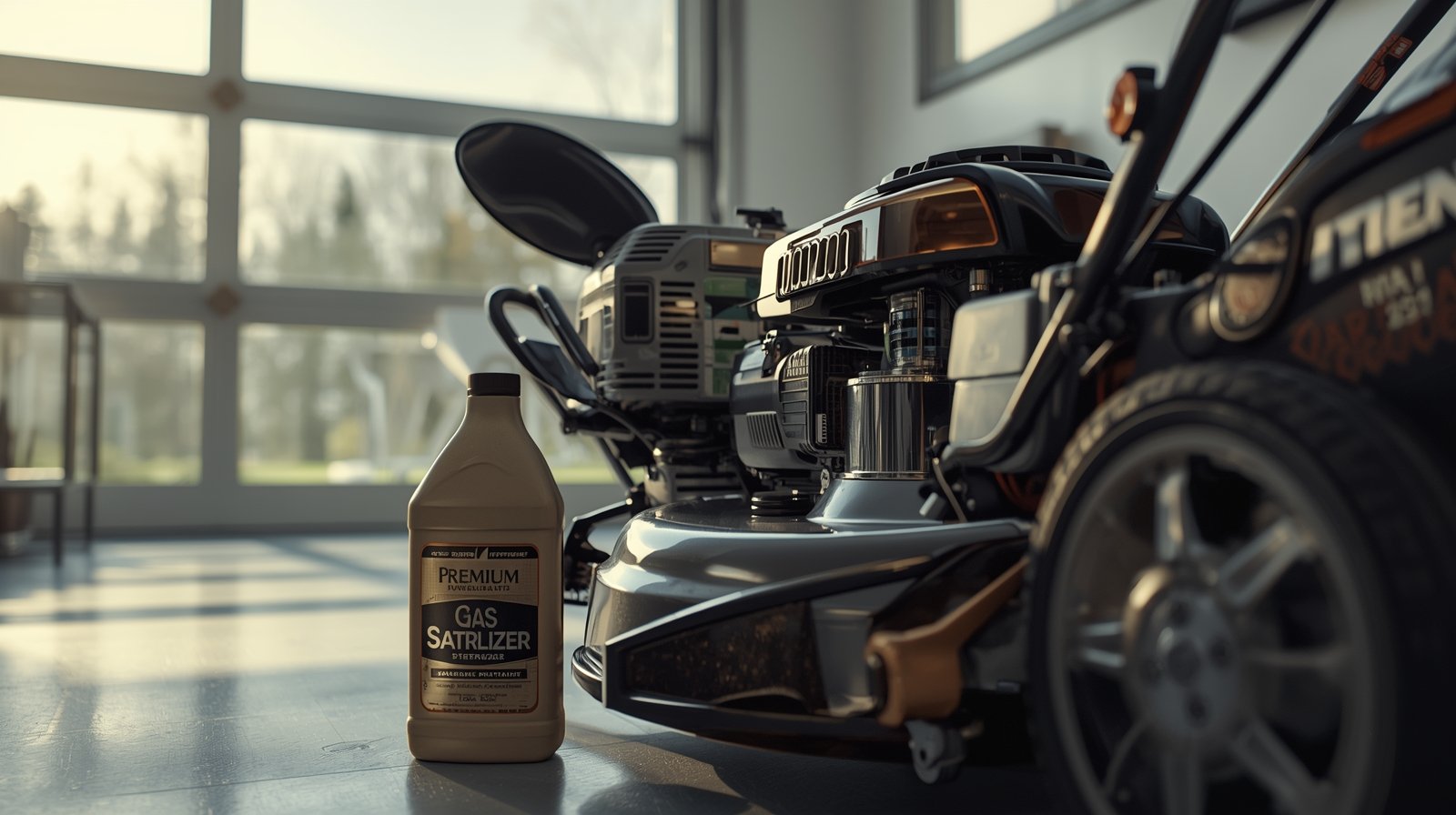
Gas Stabilizer for Lawn Mower: Why Fuel Deserves More Attention Than It Gets
Most lawn mower problems don’t show up suddenly. They build quietly over time. A mower may run perfectly in late summer, get parked in the garage or shed, and then months later refuse to start. To many people, that feels mysterious. In reality, the cause is often something simple: fuel that changed while no one was looking.
This is where understanding a gas stabilizer for lawn mower use becomes valuable. Not because it fixes broken machines, but because it helps prevent small, invisible fuel changes that lead to bigger issues later.
Gasoline is not a stable fluid. It starts the moment it is pumped into a container or tank and reacts with its environment. Lawn mowers, which can be left to sit for long periods of time without use, allow fuel ample opportunity to go bad. The stabilizer exists to slow that process down.
This post takes a calm, detailed look at how fuel behaves, why lawn mowers are affected more than most machines, and how stabilizing fuel fits into responsible mower ownership.
How Gasoline Naturally Changes Over Time
Gasoline consists of numerous hydrocarbons. Some evaporate readily, some oxidize upon exposure to air, and some are transformed by heat or moisture. Those slow changes are always taking place.
The fuel also gets heavier and less easy to ignite as lighter elements are boiled off. Residues of the adhesive become sticky as it oxidizes. Today’s gasoline often has ethanol in it, and that actually draws moisture from the air. That moisture can come out of the fuel and collect in low points of the fuel system.
None of this happens all at once. Instead, it happens quietly while the mower sits. That’s why fuel problems often feel unexpected.
A gas stabilizer for lawn mower fuel retard oxidation and reduces the formation of these residues, thus maintaining fuel closer to its original state for a longer time.

Why Lawn Mowers Are Hit Especially Hard
Cars, trucks, and the machinery of daily life consume fuel in a prodigious rush. Lawn mowers do not. Many are used only once a week, once a month, or during specific seasons. That difference matters. For those exploring different mower options, choosing the right model can affect maintenance routines. Understanding the features of the best zero-turn mowers can help owners plan fuel care and storage more effectively
Small mower engines also use simple fuel systems. They rely on gravity-fed fuel, basic carburetors, and open vents. These systems work well, but they do not shield fuel from air and moisture the way modern vehicle systems do.
Because of that, even small fuel changes can affect performance. A mower that still runs may start harder, run rough at idle, and cut out when it’s the least convenient. Over time, deposits can accumulate in the narrow passages and impede fuel flow.
Using a gas stabilizer for lawn mower maintenance helps reduce these risks by slowing fuel degradation before it becomes a mechanical issue.
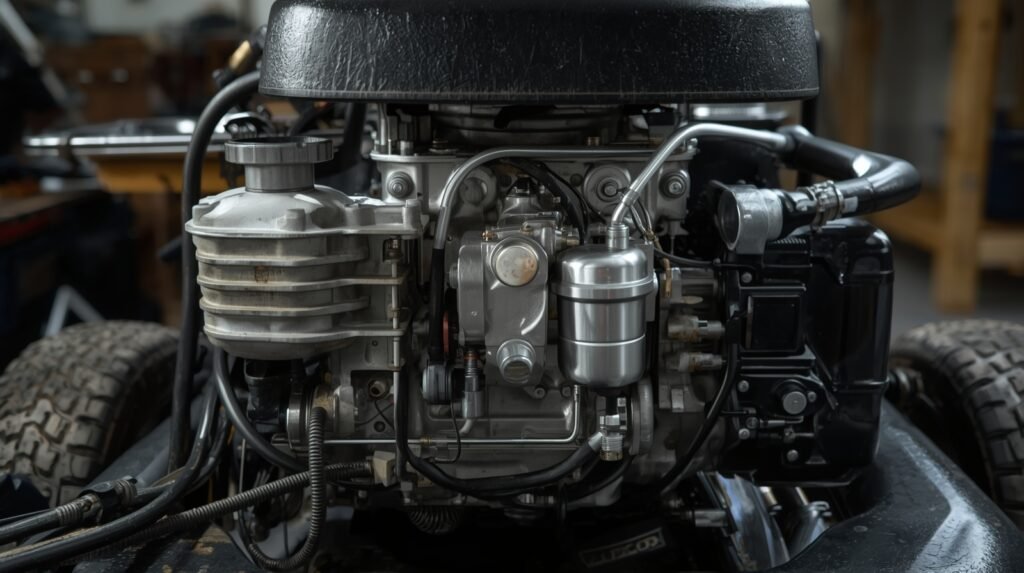
What a Gas Stabilizer Actually Contributes
A stabilizer does not make gasoline stronger or engines more powerful. Its role is quieter and more practical. It works in the background, reducing the chemical reactions that cause fuel to age poorly.
By slowing oxidation, the stabilizer helps prevent sticky deposits from forming. Addressing moisture attraction, it reduces corrosion risk inside fuel components. Preserving lighter fuel elements helps maintain proper combustion characteristics.
The benefit is not immediate excitement. The benefit is consistency. A mower that behaves the same way after storage as it did before storage.
That consistency is what many owners value once they experience it.
A Familiar Scenario Many Owners Experience
Picture a typical early spring weekend. The grass is sprouting at an alarming pace, the weather is warm beyond reasoning, and that mower hasn’t been touched in months. You unspool it, verify the oil, and give a tug on the starter cord.
Nothing happens.
You pull again. Maybe it sputters. It may smell like fuel, but it will not run. All of a sudden, mowing’s for a project instead of a chore.
In a lot of these cases, nothing is broken. The fuel simply changed while the mower sat. Had the fuel been treated earlier, the outcome might have been different.
This is the type of situation a gas stabilizer for lawn mower fuel care is designed to help prevent.

When Fuel Stabilization Makes Practical Sense
Fuel stabilization is not about constant treatment. It makes the most sense during certain moments in a mower’s life.
The most common is seasonal storage. When a mower will not be used for weeks or months, treating fuel beforehand protects the system during that idle time.
It also helps when mowing schedules are irregular. If fuel may sit in the tank longer than expected, stabilization adds a layer of protection.
Another situation is stored gasoline. Fuel kept in cans for later use benefits from stabilizer immediately, since containers expose fuel to air and temperature changes.
In these moments, a gas stabilizer for lawn mower fuel becomes part of routine care rather than an emergency solution.
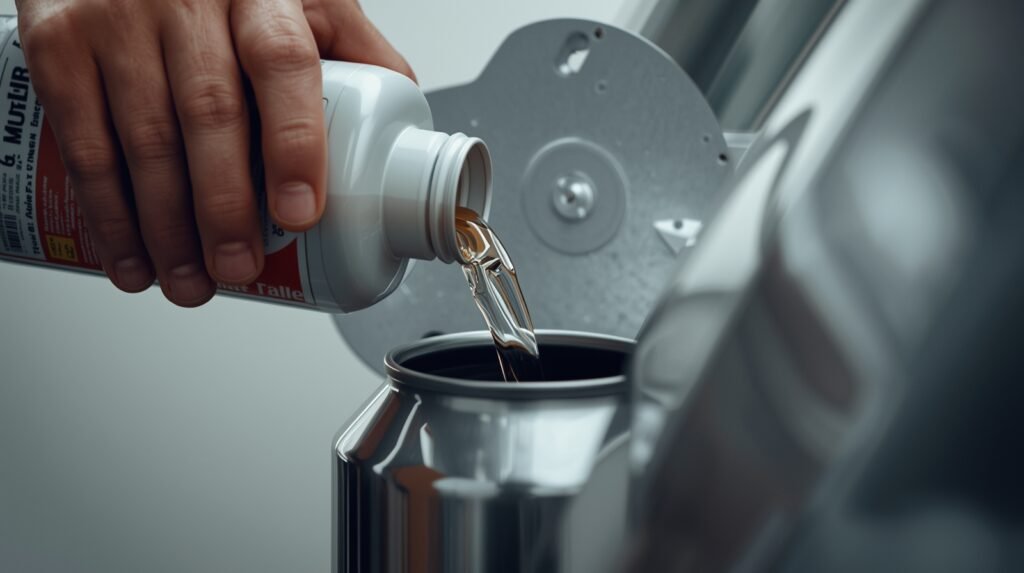
How Stabilizer Is Used Without Complications
The process of using a stabilizer is simple, but order matters. A stabilizer should be added to fresh gasoline, not fuel that has already aged noticeably.
Once added, the engine should be run briefly. This allows treated fuel to move beyond the tank and into the carburetor and fuel lines. Without this step, only part of the system is protected.
After that, storage conditions matter. Cooler, drier environments slow fuel changes even further.
When done correctly, a gas stabilizer for lawn mower treatment works quietly during storage, with no attention required.
One Small List: Common Misunderstandings
Many issues with stabilizers come from expectations rather than the product itself. Two misunderstandings show up often:
- Stabilizer does not repair old fuel; it preserves good fuel
- Stabilizer works best before storage, not after problems appear
Understanding these points prevents disappointment and misuse.
Fuel Stabilization Versus Draining Fuel
Some owners choose to drain fuel entirely before storage. Some folks prefer to stabilize the fuel and leave it in the system. Both methods aim to avoid fuel-related damage.
Draining removes gasoline but can leave seals dry and components exposed. Stabilizing keeps fuel present while reducing chemical changes.
For many people, stabilization offers a balanced approach. It avoids dry storage while still protecting against degradation.
A gas stabilizer for lawn mower routine often fits better into normal maintenance habits.
How Long Stabilized Fuel Remains Usable
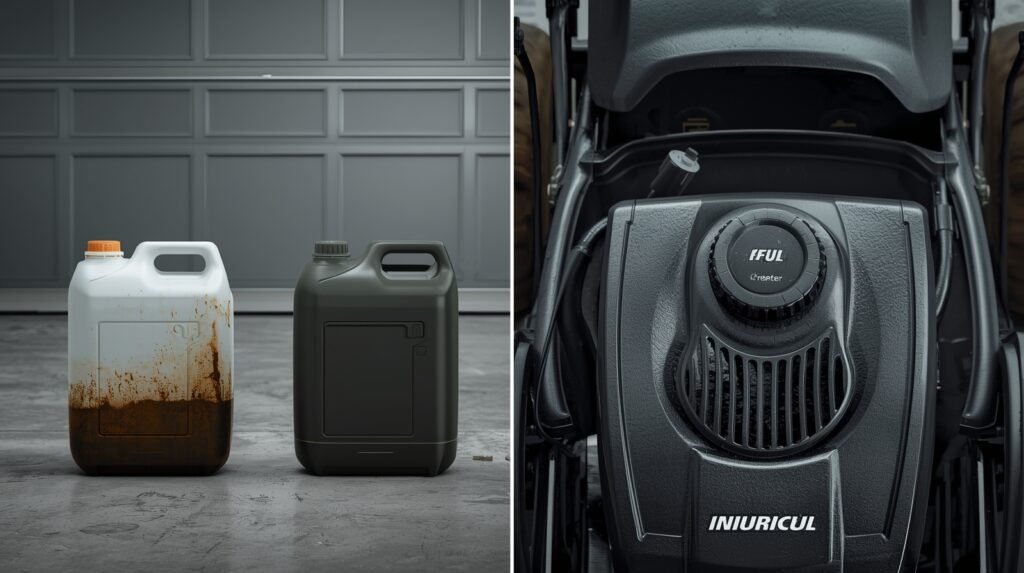
The life of fuel depends on a variety of factors, like temperature, humidity, air exposure, and the composition of the fuel. Unstabilized gasoline can start to degrade within a month. Stabilized fuel lasts significantly longer.
This does not mean fuel lasts forever. It also means the window of usability is widened so that it is less likely for starting issues or deposit build up to occur during a typical storage period.
Using a gas stabilizer in lawn mower fuel adds flexibility, reliability, mainly across seasons: Lawn mowers have long memories.
Here’s Why This Is Preventive Maintenance, Not Extra Work
Preventive maintenance always seems the stuff of choice rather than necessity until it pays off. Fuel stabilization is a classic example.
It’s quick, tool-less, and no tech is necessary. But it does avoid some of the most notorious mower curses: You don’t have to pull 10 times to start it, choke-hold it in cold weather, or wonder about what gunk is accumulating in its fuel system. Fuel stabilization is a small habit that fits naturally alongside other home and lawn care basics that help prevent avoidable problems over time.
Drivers who maintain fuel well get less surprises coming back from mowing hiatuses.
That reliability is the quiet payoff of a gas stabilizer for lawn mower habit.
Looking at Fuel Care From a Long-Term View
If you take care of your lawn mower, and always keep it in the garage, for instance, then those tips will make sure that it is maintained. But fuel related problems can cut that life span short if they occur season after season.
The thing is, each bad fuel episode does leave some deposits behind. Over time, those deposits accumulate. It’s easier to stop them early than deal with them later.
Stabilization helps engines to remain clean and be maintained, in as much as its effects are not immediately apparent.

FAQ’s What is Gas Stabilizer for Lawn Mower
What is a gas stabilizer for lawn mower fuel used for?
A gas stabilizer in lawn mower fuel is added to help stall the natural decomposition of gasoline while the mower is not being used. It extends the shelf life of fuel, keeping it fresh and usable for a longer period of time. It minimizes sniffing problems associated with stale gas during storage.
When to Add Fuel Stabilizer in Lawn Mower?
Fuel stabilizer needs to be added while the gas is still fresh, and not five minutes before it’s put into seasonal storage or a lull between mowing times.
Can a gas stabilizer fix old or bad gasoline?
No. A gas stabilizer for lawn mower use does not repair gasoline that has already gone bad. It is designed to preserve fresh fuel before it begins to degrade.
Do I need fuel stabilizer only for winter storage?
Fuel stabilizer is mainly used prior to seasonal storage or when gasoline will not be in use for 30 days or longer; however, adding Zepazine at any time keeps fuel fresh and enhances engine performance.
Can the lawn mower be started after adding the fuel stabilizer?
Yes. Cranking the mower up and letting it run for a few minutes allows the stabilized fuel to circulate through the rest of the engine independently, protecting internal components further up the line than within the fuel tank.
Does fuel stabilizer improve lawn mower performance?
Fuel stabilizer does not add power or speed. Its job is to keep the fuel in proper condition so that the engine’s startup and operation after storage are as they should be.
How long can stabilized gasoline remain usable?
However, properly stored boxes of fuel stabilized gasoline can remain usable for several months, though the exact duration is dependent on temperature, humidity, and exposure to air
Final Thoughts: A Small Step That Supports Reliable Mowing
Fuel rarely gets attention until it causes trouble. By then, the solution often requires draining tanks, cleaning parts, or troubleshooting starting problems.
A gas stabilizer for lawn mower use shifts that timeline. It addresses fuel issues before they appear, quietly preserving gasoline while the mower rests.
For owners who want their mower to behave predictably from one season to the next, fuel stabilization is not an extra step; it’s a sensible one.