
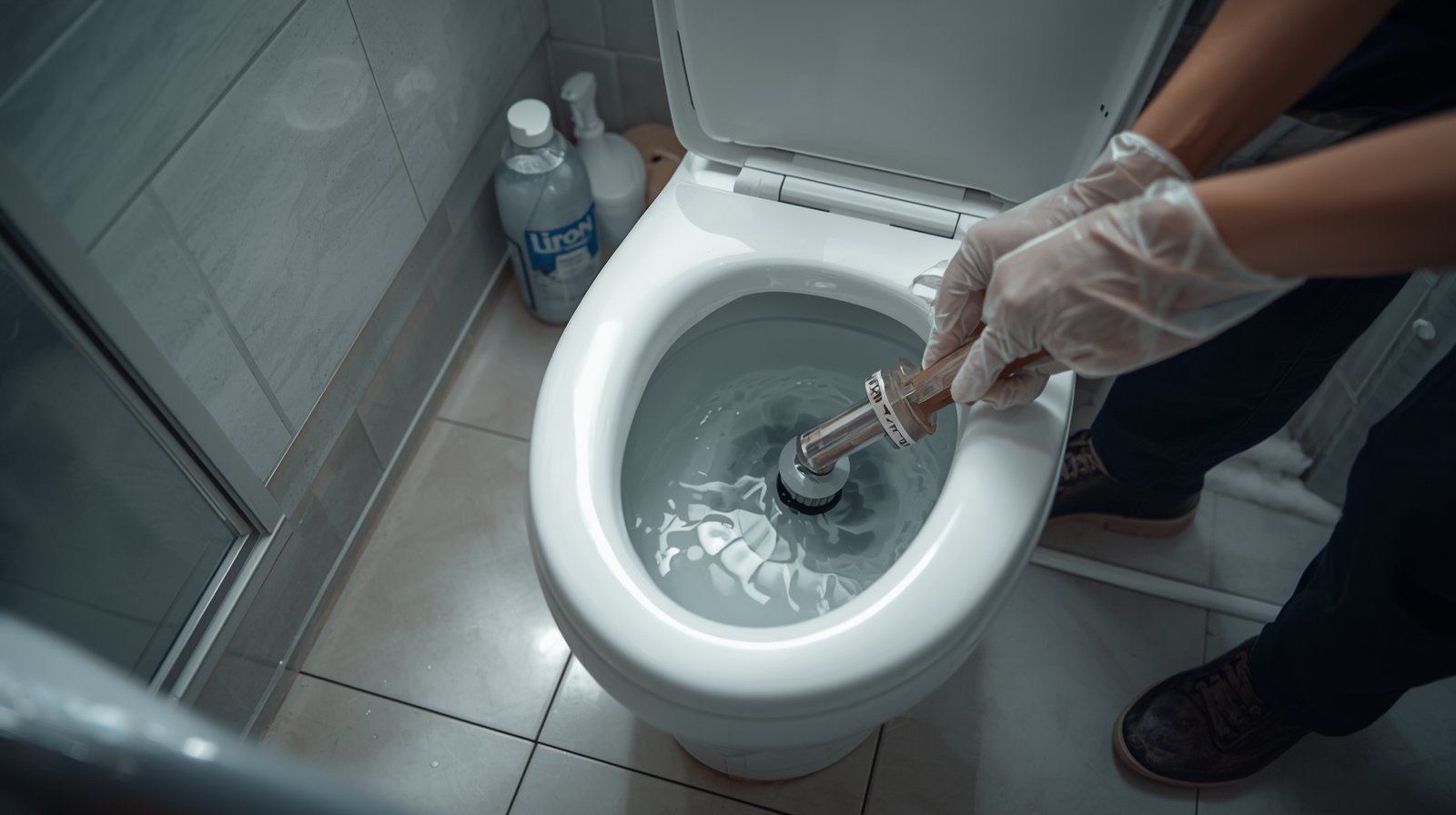
How to unclog a toilet full of poop and water is one of those household skills you don’t think exists until you actually need it. Dealing with a completely blocked toilet is messy, frustrating, and time-consuming. If you repeatedly flush without remedying the clog, you only end up with the bowl overflowing and making for greater cleanup further down the line.
The vast majority of toilet clogs caused by solid waste and some toilet paper can be remedied at home using simple tools and a little know-how. The trick is to tackle with a cool head, contain the water from rising, and use the appropriate unclogging solution in proper succession. This guide outlines every step, so even a novice can deal with the situation safely and make it out alive.
First Steps Before You Attempt to Unclog PIPE Anything
Before picking a method, get the situation under control. This has the advantage of preventing overflows and giving you Working time.
Either of these types of flappers will stop the flow of water to the bowl when pushed down, but only if you can get it there. If the level in the bowl is relatively close to the rim, lift off your toilet tank lid and push that rubber flapper down. Turn off the water supply valve located at the back of the toilet by turning it clockwise, if necessary.
Next, avoid repeated flushing. Many severe clogs happen because people panic-flush multiple times. One flush is enough to confirm there’s a blockage.
Wear disposable gloves if you have them. Have old towels or paper towels handy in the vicinity for splashes. And now you are ready to begin unclogging in earnest.
What Causes a Toilet to Become Completely Blocked With Poop and Water
Knowing the problem allows you to select the right solution when trying figure out how to unclog a toilet full of poop water.
Most severe clogs happen due to:
Too much toilet paper is used at once
Low-flow toilets that cannot move heavy waste effectively
Hard stool combined with thick paper buildup
Foreign items accidentally flushed
Partial pipe blockages that were already forming
If you can see the clog in the toilet, it’s most likely sitting in the toilet trap or one of its upward bends, and that usually means you can clear it without removing the toilet.
Method 1: The Right Way to Use a Flange Plunger
A flange plunger is made for use on toilets. It features a loose extension on the bottom of the cover that fits into drain openings and provides an excellent seal.
Insert the plunger into the bowl at an angle, filling its cup with water, not air. Press down gently first to seal, and then rhythmically perform thrusts. Don’t pump too vigorously; all that does is make a splash.
After doing that 15–20 times, stop and check if the water level goes down. If it takes a while to drain, the clog is beginning to unravel. Repeat another cycle if needed.
Plungers often don’t work because of short, shallow strokes. Slow, deep pressure changes work better than quick quips.
Method 2: Put in Hot Water and Dish Soap
It is a good knife when waste and paper are baled together and require lubricant for flow.
Add a liberal squirt of liquid dish soap. Set for 10–15 minutes to allow it to cover the blockage. Then dump a bucket of hot but not boiling water from waist height.
The heat and pressure of the water allow the material to soften, while the soap also reduces friction. Wait another 10 minutes before attempting to flush once. If the toilet looks like it’s working, you can also try plunging again.
We do not recommend boiling water as it is possible to crack the porcelain, especially in an older toilet.
Method 3: Try a Toilet Brush Push Technique
A strong toilet-brush can sometimes help break up soft clogs if you don’t have a plunger.
Feed the brush head into the drain opening, pushing firmly but gently. Twist slightly while pushing to help break apart packed waste and paper. This is less effective than plunging, but it can open a partial path.
After loosening, follow with hot water and soap to continue clearing the passage.
Use this method only with a strong brush. Thinner or bendy brushes will be lulled into a curve (instead of being pressed into your skin).
Method 4: Use a Toilet Auger (Closet Snake)
For tough blockages, a toilet auger is one of the most reliable tools. It comes with a protective sleeve so it won’t scratch the porcelain.
Place the auger down into the drain opening and turn the handle in a clockwise direction while applying pressure. When you encounter resistance, keep turning the tip of the cable until it either pushes through or grabs onto the clog.
Pull back slowly. You may bring material back up or open a clear path downward. Either outcome is useful.
For persistent cases of how to unclog a toilet full of poop and water, this tool often solves the problem when plungers fail.
Method 5: Use Controlled Gravity With a Water Dump
Occasionally, volume’s force is more effective than pressure from a plunger.
Get a bucket of warm water down from somewhere and throw it hard into the bowl. The clog can be dislodged by the added weight of the water column falling into the drain on top.
This method works best when the bowl water level has already dropped somewhat. Do not try it if the toilet is near overflowing.
Think of it as a controlled flush with some extra weight behind it.
Method 6: Baking Soda and Vinegar Reaction
This one takes longer than mechanical methods, but it can help knock back organic buildup.
Pour one cup of baking soda in the bowl, and then two cups of vinegar. It’ll fizz and bubble up when you add it.
Let it sit for at least 20–30 minutes.
Follow with warm water and then attempt a flush or plunge. It’s a gentle, safe approach that won’t harm pipes, but not effective on its own against very dense clogs.
It is most effective when used in conjunction with another process afterwards.
Method 7: Wait and Soften the Blockage
In the best case, when a clog is primarily composed of waste and paper, sometimes time itself becomes an effective solution. Water will soak into the mass and soften it if you let the bowl sit for an hour or longer.
Let the plunger go to work again. Tough clogs are often hand-washed after soaking, as the material is easier to clean.
This is the lowest-effort approach, but you’ll need to be patient and maintain a steady water level.
What Not to Do When the Toilet Is Fully Blocked
Mishandling while unstopping a toilet full of poop and water may make the situation worse.
Avoid chemical drain cleaners. They generally don’t work on toilet clogs — and can damage seals or cause splash hazards.
Do not keep flushing repeatedly. Every flush contributes more water but doesn’t actually clear the blockage.
No random tools like wire hangers. They scratch porcelain and can become lodged.
Never mix multiple chemical products. Reactions can produce dangerous fumes.
Signs the Blockage Is in the Drain Beyond the Toilet
The clog isn’t always located in the toilet trap. It’s possible that it exists further down the drain line. In some cases, users also notice that the toilet tank does not refill properly after dealing with a clog, which can indicate a separate issue. Understanding why your toilet is not filling up with water can help identify whether the problem is mechanical rather than a blockage.
Watch for these signs:
Multiple fixtures are draining slowly
Gurgling sounds from nearby drains
Water rising in the shower when you flush
Recurring clogs in a short time
In those scenarios, unclogging the commode might not be enough to deal with the problem. You may need to have a main drain cleaning.
Preventing Future Full Bowl Clogs
Prevention reduces the chances you’ll need to repeat the process of how to unclog a toilet full of poop and water again soon.
Use moderate amounts of toilet paper
Flush once per use instead of stacking paper
Do not flush any wipes or hygiene products
Teach kids what not to flush down the toilet
Think about a pressure-assist or high-flow toilet if you constantly battle clogs. If clogs continue despite proper usage, choosing one of the best toilets for preventing frequent clogs can significantly reduce blockage issues caused by weak flushing systems.
The little things add up over time.
When to Call a Plumber
Self-help strategies usually get the job done, but professional assistance may be in order when:
Auger attempts fail repeatedly
Water backs up into other fixtures
There is a sewage odour or leakage
Clogs happen every few days
Obviously, there was a deeper blockage that a plumber could get out and remove safely.
FAQ: How to Unclog a Toilet Full of Poop and Water
How do you instantly unblock a toilet full of poop and water?
The quickest way is to use a flange plunger that seals and pound against the stop force. If that doesn’t do it, add dish soap and hot (not boiling) water, let sit 10–15 minutes, then plunge again. These two techniques solve most soft waste and paper jams.
Can I flush if the toilet is full of poop and water?
No Flushing again could make the bowl overflow and just cause a bigger mess. Cease flushing again until the obstruction is flushed, or the water level has subsided somewhat.
What are the best options to unclog a toilet filled with poop and water?
For toilet clogs, a flange plunger is your best friend. More difficult clogs may be cleared with a toilet auger, also known as a closet auger, which is similar to a drain snake and is inserted into the trap.
Is hot water effective at clearing toilet clogs?
Yes. Hot water and dish soap can soften waste and break up paper buildup. You want hot tap water, not boiling water, because boiling could cause the porcelain bowl to crack.
Does dish soap really help unclog a toilet?
To address a minor blockage, dish soap can be useful to seal the clog and decrease friction within the trapway. It tends to be most successful, followed by hot water and a plunger. It is a safe baby step for the transition to tools.
Will baking soda and vinegar unclog a toilet full of poop and water?
This blend can dissolve organic material, though it does so slowly and may not be aggressive enough for completely clogged pipes by itself. It’s better for a follow-up rather than going for it mid-plunge.
Conclusion
How to unclog a toilet full of poop and water is nearly always about the technique you use in the right sequence. Begin by averting the threat of an overflow, then progress through basic remedies like plunging and hot water to more powerful interventions like a toilet auger if required.
The truth is, most household clogs can be cleared easily without chemicals or expensive plumbing repairs. Allow to re-establish correct flow with patience and the right method, quickly and safely. And, if the problem happens frequently, that’s your indicator to look into deeper plumbing problems before they become bigger.