
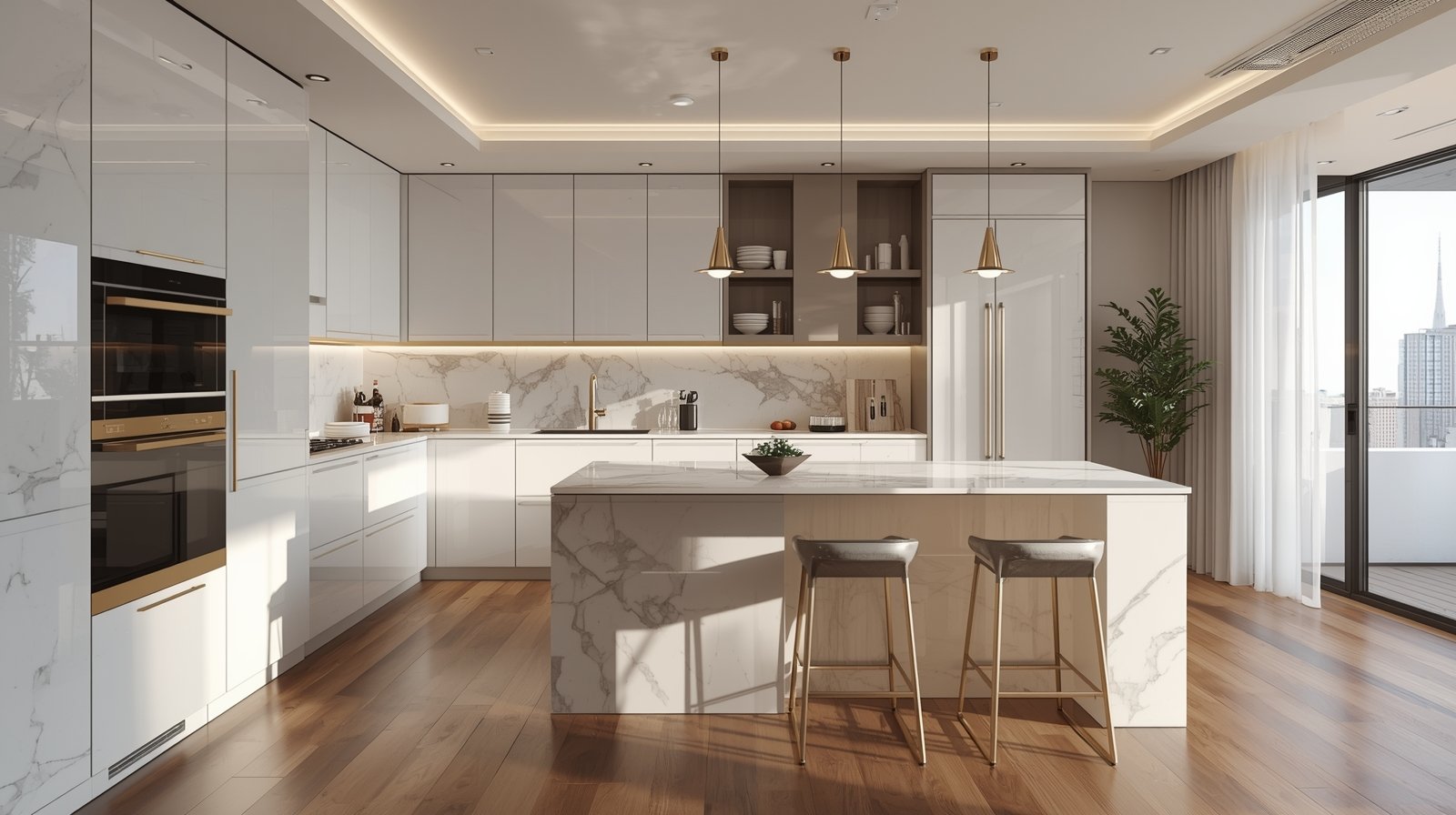
Why Smart Layout Matters More Than Size
Small kitchens do not succeed just because they are small. They don’t work because they are badly conceived. That’s why limited space small l shaped kitchen design is one of the most efficient and practical layouts for small homes.
In apartments, older homes , and the kitchens of new condos alike, space can be tight, weirdly configured, or tucked into a corner. An L-shaped plan plays to those constraints rather than fighting them. It’s movement and workflow control that simultaneously (and almost silently) brings calm to the chaos.
Once, with a relative, I gently helped re-envision a tiny, stress-inducing kitchen that made it difficult to cook. Nothing about the room size changed. Only the layout did. The difference wasn’t dramatic in photos, but day to day, it felt like breathing room had been added. That’s what good design does.
In this guide, you’ll learn exactly what a small U-shaped kitchen is, how and why it works in homes today (with full-color illustrations of real kitchens), how to plan your own correctly, and the mistakes to avoid that ruin smaller U-shaped kitchen designs.
Getting to Know the Concept of L-Shaped Kitchens
An L-shaped kitchen entails two perpendicular walls at a 90-degree angle. One wall typically hosts the work zone, while a second one may house storage, prep or even additional appliances.
In small spaces, this shape becomes even more powerful. Instead of spreading cabinets across multiple walls, the layout concentrates function into a compact zone. That concentration improves efficiency and reduces wasted steps.
A limited space small l shaped kitchen design relies on three principles: efficient corner use, uninterrupted workflow, and visual simplicity. When these are respected, the kitchen feels controlled instead of cramped.
Why L-Shaped Layouts Excel in Limited Space
Natural Movement and Flow
People don’t cook in straight lines. They turn, pivot, and reach. The L-shape mirrors that behavior. You can move from sink to stove without crossing the room or bumping into cabinets.
This layout also reduces traffic conflicts. In open-plan homes, it keeps the cooking zone contained, so others can pass through without interrupting the cook.
Better Use of Wall Length
Straight-line kitchens tend to squander corners or cram appliances too close together. The L-shape spreads out the functions between two walls, so that each can breathe.
This balance is what makes limited space small l shaped kitchen design feel practical rather than restrictive.
Planning the Layout With Precision
Start With Real Behavior, Not Trends
Before choosing finishes or cabinets, planning must begin with behavior. How often do you cook? Do you prep meals daily or occasionally? Do you rely more on countertop appliances or cabinet storage?
Small kitchens punish assumptions. Every decision should solve a real problem.
The Work Triangle in Compact Kitchens
Even in limited square footage, the work triangle remains relevant. The sink, cooktop and refrigerator triangle should be tight but workable.
In L-shaped kitchens, that typically means positioning the sink on or near the corner, the stove along one wall and the refrigerator at the far end of a second wall. This keeps movement efficient without crowding.
A well-planned limited space small l shaped kitchen design feels instinctive. You don’t think about where things are. Your body just knows.
Mastering Corner Space Without Wasting It
Corners are the best and worst thing about L-shaped kitchens.
Badly conceived corners turn into dark, inaccessible voids. Well-designed corners become powerful storage hubs.
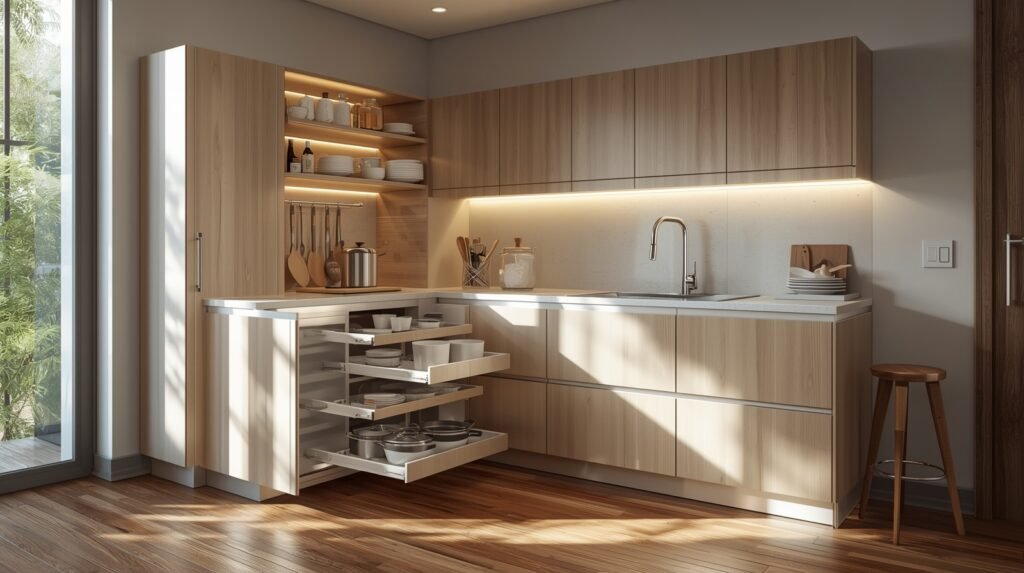
Functional Corner Solutions
Modern corner solutions include rotating shelves, angled drawers, and pull-out systems that bring contents into full view. These options prevent the “lost cabinet” problem common in older kitchens.
When corners are planned correctly, a limited space small l shaped kitchen design gains storage without adding visual weight.
Cabinet Strategy for Small L-Shaped Kitchens
Upper vs Lower Cabinet Balance
All those upper cabinets can be a bit much in a small kitchen. The aim is balance, not full coverage.
Extending cabinets to the ceiling can be helpful, but they should remain visually simple. Flat-front or lightly detailed doors work best. Upper cabinets should remain visually simple, and for inspiration on using the space above them, you can explore modern cabinet styling tips.
Visual Calm Through Consistency
Consistent cabinet finishes across both walls create a unified look. The visual flow of the wall is “broken” when too many colors or styles are mixed, and the kitchen looks smaller.
While in denser configurations, simplicity was not the key.
Countertop Planning for Real Use
Space is at a premium in small kitchens. The L-shape helps by providing two distinct work surfaces instead of one long, crowded one.
One side can stand in for prep when the other is firm enough to use while cooking or serving. Even a short return wall can become valuable workspace when planned intentionally.
In many limited space small l shaped kitchen design layouts, this dual-zone setup is what makes cooking feel manageable.
Appliance Placement Without Crowding
The layout should be complemented by appliances, not overpowered by them.
Oversized appliances can seem too visually bulky and will eat up precious space if you’re working in a small kitchen! Compact or all-in-one models also often fit better and maintain a slimmer profile.
That way, your cabinets will match, and that cohesion is key for maintaining a consistent visual flow. When your appliances feel integrated with the rest of your cabinetry, the room as a whole feels more serene and deliberate.
Lighting Plan for Small L-Shape Kitchen
Decoration doesn’t light the way in small kitchens.
Task Lighting Comes First
Under-cabinet lighting is critical. No shadow, enhanced safety, and usability.
Ambient Lighting Without Visual Noise
Ceiling fixtures should be simple and flush-mounted. Hanging lights often intrude on sightlines and make small kitchens feel crowded.
Good lighting can quietly elevate a limited space small l shaped kitchen design, from functional to comfortable.
Flooring and Visual Expansion
If you can take the floor into the next space other than the kitchen. Flush flooring opens the room up, creating an unbroken sweep of the eye.
Colors should be on the lighter side of medium. Dense patterns stop the eye, and also make small spaces feel chopped up.
The aim is to give the eye a full range of movement and encourage a sense of openness.
Storage That Supports Daily Life
Storage should match usage frequency. Everyday items live in the easily-accessible zones. Things used only occasionally can inhabit higher or lower spaces.
Pull-out drawers, vertical dividers, and shallow shelves are just a few of the elements that can increase usability without adding bulk. For additional practical insights on keeping a compact kitchen functional and organized, you can refer to these kitchen organization tips.
A smart, limited space small l shaped kitchen design prioritizes access, not volume.
Avoiding Common Design Mistakes
It’s just one of the many trade-offs you end up making, one of which is, often enough, overdesigning. The room can also be too busy with features, textures , or decorative elements in excess.
Another mistake is forgetting door and drawer clearance. Small kitchens are easy in which to causing collisions due to quick planning.
Design is meant to eliminate friction, not create it.
should reduce friction, not introduce it.
Making the Kitchen Feel Human
The most efficient kitchen should feel personal. Subtle elements, like a single open shelf, a plant near the window, or a favorite utensil left out on display, bring in warmth without clutter.
I remember a tiny L-shaped kitchen where the homeowner covered one small wall with only a handwritten grocery list. It was not ornamental, but it felt lively. And that’s the difference between a kitchen that looks good and one that feels good.
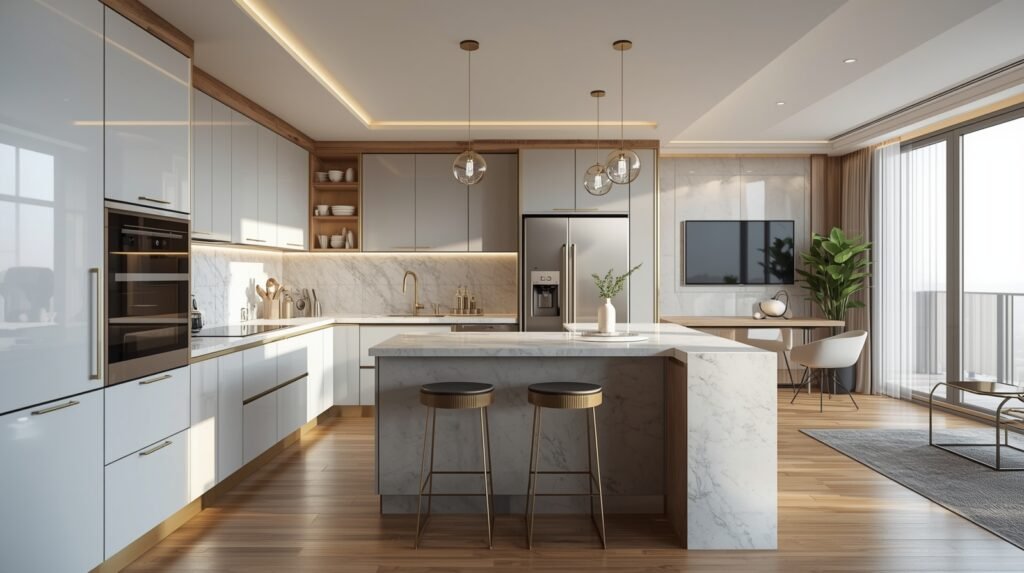
Long-Term Function and Adaptability
A good kitchen design should age well. It’s more about the layout than the type trends.
Its L-shaped design is suitable for all types of lifestyle changes. Whether your cooking habits change or you are in need of more storage, the skeleton serves a purpose.
That long-term flexibility is one of the unsung strengths of small space limited space small l shaped kitchen design.
Final Thoughts
Small kitchens demand respect. They expose poor planning instantly but reward thoughtful design generously.
If done right, a small L-shaped kitchen can turn that little space into a work of art where cooking is easy and stress-free. It supports real cooking, real movement, and real daily life.
An efficient, limited space small l shaped kitchen design does not mean you are forced to have things in a cramped style. It’s having everything with a clear purpose and proper place.
That clarity is what lets a small kitchen really work.