
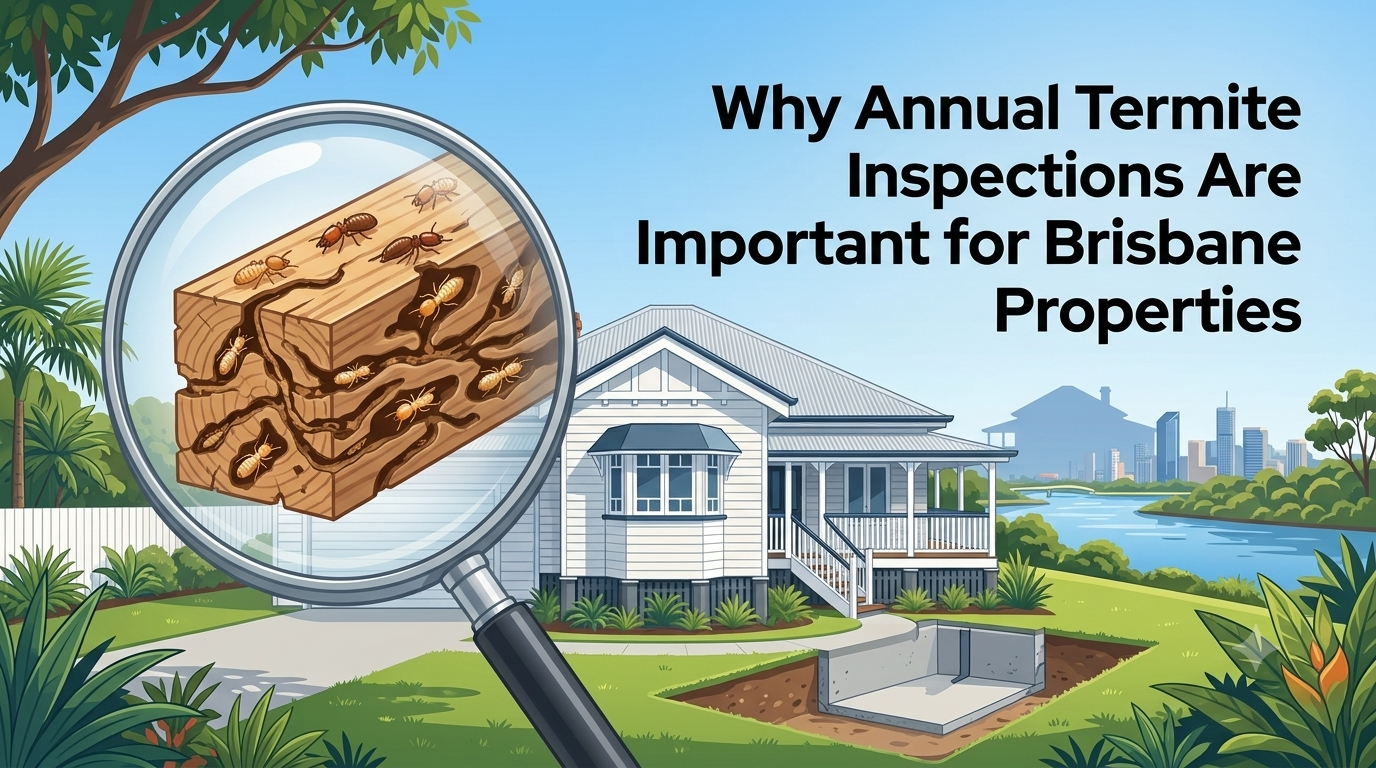
Termite management is not a set-and-forget task. Barriers, building design and good maintenance can reduce risk, but termites may still find concealed entry points or exploit changes around a property. Regular inspections are intended to identify activity, damage and conditions that could weaken the property’s defences before the problem becomes obvious.
Termites can remain hidden
Subterranean termites generally travel through soil, mud shelter tubes and concealed building spaces. They may feed inside timber while leaving the external surface largely intact. A homeowner can therefore see no insects and still have activity in a wall, subfloor or structural component. A professional inspection uses a systematic process and may include specialised detection tools where appropriate.
Properties change over time
A termite management system is installed or assessed at a particular point in time, but the surrounding property does not stay the same. New garden beds, paving, soil, decks, air-conditioning pipes, stored materials and renovations can conceal inspection zones or create bridges over protective systems. Annual reviews help identify these changes and allow corrective maintenance to be planned.
Moisture problems can develop gradually
Leaking taps, overflowing gutters, damaged drainage, plumbing leaks and poor subfloor ventilation may begin as minor issues. Over time they can create damp conditions that support termite risk and timber deterioration. An inspection can highlight visible conducive conditions, although plumbing or building specialists may be needed to repair the underlying problem.
Existing systems have service requirements
Chemical and physical termite management systems have different purposes, expected service lives and maintenance instructions. Homeowners should locate the termite management notice and keep installation, treatment and inspection records together. A system may require monitoring, replenishment or other maintenance in accordance with the manufacturer’s guidance and the site conditions.
An inspection provides a documented snapshot
No inspection can guarantee that termites will never enter a property, particularly where areas are concealed or inaccessible. A written report instead records what was accessible, what evidence was found, what limitations applied and what actions were recommended at that time. Keeping these reports creates a useful maintenance history for the owner and for future property transactions.
High-risk signs should not wait for the yearly visit
Annual scheduling does not mean suspicious activity should be ignored between inspections. Mud leads, hollow timber, discarded wings, blistered paint or unexplained damage should be assessed promptly. Avoid disturbing suspected activity, because leaving it intact can help a technician trace the pathway and choose an appropriate response.
Working with a local termite professional
Local building styles, soil conditions and landscaping practices influence the inspection process. Brisbane Termite & Pest Control offers termite inspections and management options for Brisbane homes and businesses, allowing owners to discuss the property’s construction, previous treatment history and any recent changes that may affect risk.
Conclusion
Annual termite inspections are a practical part of property maintenance, not a guarantee or an unnecessary formality. Combined with moisture control, visible inspection zones and proper system maintenance, they improve the chance of identifying concerns early and protecting the long-term condition of the building.