
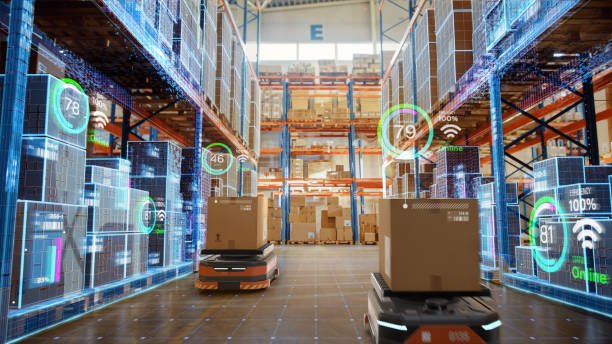
Start With the Task, Not the Robot
Robot technology is good, but the most important issue to tackle is the production one. An organization ought first to recognize repetitive tasks, and physically taxing/ dangerous/ staffing problem/ consistent-key. Secondly to identify where these robotic approaches may address the problem.
Volume and Repeatability Are Important
Robots are at their most effective when there is sufficient repetition in the work for the movements, tooling and control to be built around it. Picking, packing, palletising, welding and machine tending at high volumes fall into this category. It is however applicable at lower volumes, though careful consideration must be given for changeovers and product variation with flexible programming.
The Robot Is Only One Part of the Cell
A successful robotic cell may require grippers, conveyors, fixtures, sensors, guarding, safety scanners, PLC programming and communication with existing machinery. Vision systems may also be needed when parts arrive in varying positions. AKA Electrical & Automation integrates robotics with control, safety and vision systems, illustrating why installation is an engineering project rather than simply purchasing a robot arm.
Cycle Time Must Be Realistic
The justification for the robot automation must be based on the real production cycle, whereas a fast robot movement can still be limited by the material presentation to, process time of, or the bottleneck down stream of, the robot. Simulation & tests would prove the robot is not limited and the system is commissioning well with these issues identified in advance.
Robotic Cell Design Issues
Safety issues can arise with automation. Although robots can remove people from potentially dangerous or repetitive operations they introduce new hazards relating to the movement of machines and automated restart. Risk assessment guarding interlocks and safe operating procedures must be integrated into the design at the beginning as opposed to being added later once the cell has been built.
Maintenance Skills Are Key
Robotic cells require continued support. Businesses must assess who will undertake fault finding preventative maintenance back ups and program changes. Operators also need sufficient training in order to understand normal operations and be able to identify when a system is not normal.
The Best Projects Have Clear Purpose
Robotic integration makes most sense when it addresses a clear constraint. This can include inconsistent quality labor-intensive handling safety exposure throughput limitations or production variability. A clearly defined objective facilitates system design allows for performance measurement and determines if continued automation makes sense.