
One of the chief motivations for installing or upgrading any fencing is privacy, especially with tightly positioned residential properties. A completely unobtrusive area need not, however, necessarily involve preventing all visibility whatsoever.
The initial step involves clearly defining the needs regarding privacy; it’s rare for a neighbor to have oversight across the full length of a boundary. Privacy may only be needed over, say, a pool area, patio, or outdoor entertaining space.
Installing screens in just those spots may be a more economical choice than installing a 6-foot solid barrier across a long property.
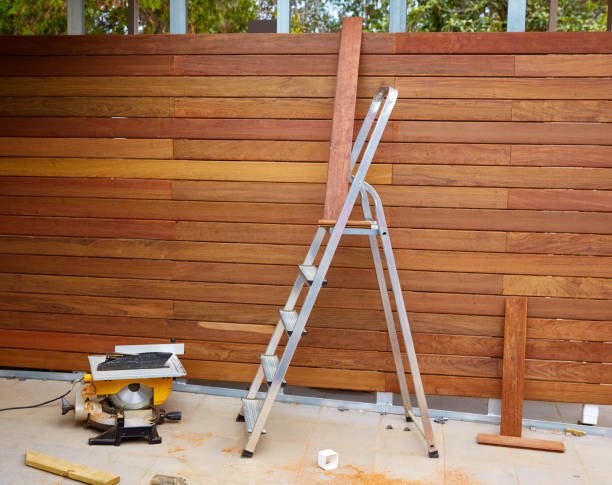
Fence height is, not surprisingly, important, but the design of the fence also significantly impacts the degree of privacy it offers. A solid panel provides maximum viewing screening, while slats (horizontal or vertical) still offer quite a bit of privacy but may provide needed airflow and light.
The width between individual slats dictates the balance of screening versus visibility, with narrower spaces giving more screening but making the fence look less like a wall. Color has some effect too-darker fencing is apt to visually recede behind the landscaping, especially if complemented by plants, although bright and distinctive colors often draw more attention. Landscaping works well in tandem with a fence-tall bushes or trees strategically placed along the fenceline soften a solid panel and increase screening.
Consider also the effects of wind. Because a full panel provides more resistance than a slotted fence, a barrier in an exposed location is at a greater risk for instability depending on post anchoring. Check local requirements; many cities and neighborhoods place height restrictions on fence installation.
Companies within the fencing sector, including BTS Industries, work with various gate and fence styles that demonstrate the different ways privacy and accessibility can be balanced.
Gates should be incorporated into the privacy plan as well. Large gaps around gates can create direct sightlines into an otherwise private yard, so their position and construction should complement the adjoining fence.
Best privacy fencing responds to how the property is used, not how to put up the highest fence possible. Taking all of the site considerations for sight lines, air circulation, outdoor living space, and landscape together will offer the greatest feeling of privacy while at the same time not making the property feel like a cage.