
Home Care & CleaningMany people think that because the dishwasher does the work for them it does not need to be cleaned. This is a false assumption as things such as food debris, grease, soap residue, and more can make their way into the dishwasher and adhere to it. This leads to a buildup that can cause issues such as the dishwasher to smell, dishes not washing clean, the drainage being hampered, and more. Knowing how to clean a dishwasher is a simple process that can keep many of these issues from arising.
In addition, a dirty dishwasher can not only be a pain to clean but can also shorten the lifespan of the dishwasher. Clogs in the filters, loss of power in the sprayers because of buildup cutting off the water pressure, and other issues related to buildup can occur if the dishwasher is not properly maintained. Luckily cleaning your dishwasher is an easy enough process and only requires a couple of common household items
How to Clean a Dishwasher
Although the machine is helping you get the dirty plates clean, it still requires some attention from time to time. This is due to the fact that small food pieces, grease, detergent deposits and much more will get to collect at the interior surfaces of the dishwasher. This could eventually lead to some other related issues such as foul odor from the dishwasher, poor cleaning of dishes and drain problems Knowing how to clean a dishwasher is an easy way to ensure that your dishwasher is always working efficiently and getting your dishes clean.
Besides the fact that cleaning a dishwasher that needs to be cleaned is an unpleasant chore, a dirty dishwasher can actually reduce its life. Issues such as the build up of debris within the filter can reduce the efficiency of the machine to effectively remove residue and can also hinder the spraying power of the device. If the water has deposits within it this may also cause build up and if not addressed may cause significant issues to your machine in the future. However the good news is cleaning your dishwasher is a fairly simple task and only requires a few common household items.
Whether you use your dishwasher everyday or only a few times a week knowing how to clean a dishwasher is an essential skill for keeping your kitchen clean.
Why Cleaning Your Dishwasher Matters
Knowing how to clean a dishwasher is important because the appliance constantly handles grease, leftover food, cooking oils, and detergent. Although these materials are washed away during each cycle, small amounts often remain inside the machine.
Over time, this residue can cause several common issues, including:
- Unpleasant smells inside the dishwasher
- Cloudy glasses and dishes
- Reduced washing performance
- Slow drainage
- Clogged filters
- Mineral buildup from hard water
Regular cleaning helps prevent these problems before they become serious. It also allows water to circulate more effectively, improving washing results while reducing unnecessary strain on the appliance.
Gather Your Cleaning Supplies
Before beginning how to clean a dishwasher, collect the materials you’ll need. Most routine cleaning can be completed using inexpensive household items.
Helpful supplies include:
- White vinegar
- Baking soda
- Mild dish soap
- Soft microfiber cloth
- Non-abrasive sponge
- Small soft-bristle brush or old toothbrush
- Warm water
- Wooden toothpick or small plastic tool for clearing spray arm holes
Avoid harsh metal scrubbers or abrasive powders unless your dishwasher manufacturer specifically recommends them. These products can scratch stainless steel or damage protective finishes. Understanding How to Clean Stainless Steel Appliances can help protect kitchen surfaces from unnecessary damage.
Start by Emptying the Dishwasher
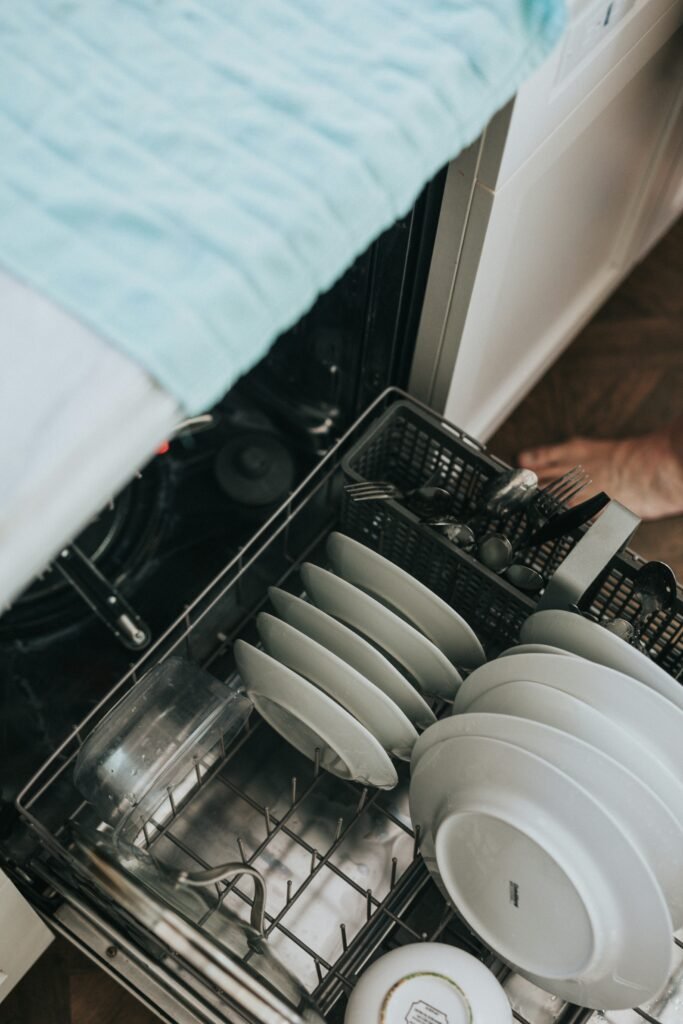
The first step in how to clean a dishwasher is making sure the appliance is completely empty. Remove all dishes, utensils, cookware, and removable accessories before beginning the cleaning process.
Now that your dishwasher is empty you can examine the drain (located in the bottom center of your dishwasher) and see if there are any remaining bits of food, broken glass, sticker residue, or other junk inside. Remove anything you find – these bits of debris can clog your dishwasher’s drain and may remain lodged in there even after the cycle is done. Quick look before you scrub gives you a head start.
Clean the Dishwasher Filter
One of the most overlooked parts of learning how to clean a dishwasher is maintaining the filter. Many modern dishwashers include a removable filter that traps food particles before they enter the drain.
If this filter becomes clogged, water cannot circulate efficiently, resulting in poor cleaning performance and unpleasant odors.
To clean the filter:
- Remove it according to the manufacturer’s instructions.
- Rinse it under warm running water.
- Use a soft brush to remove grease and trapped debris.
- Wash it with mild dish soap if necessary.
- Allow it to dry before reinstalling it securely.
Cleaning the filter regularly is one of the easiest ways to improve dishwasher performance.
Wipe Down the Interior
Even after cleaning the filter, grease and residue may remain on the dishwasher walls, door, and rubber gasket. Understanding how to clean a dishwasher means paying attention to these areas as well.
Using a microfiber towel that is slightly dampened in a solution of dish soap and warm water, the interior of the door should be cleaned. Particular attention should be given to the interior side of the door, to the door seal and to the bottom corners of the appliance, since this part typically gathers up more of the dirt.
In the instance where you are dealing with sticky little spots below the door seal as well as in and around the hinges of the door, you’ll find that a soft toothbrush works wonders at clearing away the problem area. However, you will need to be careful not to ruin the rubber of the seal as it plays a major role in keeping things from leaking out of the appliance when in operation.
Run a Vinegar Cleaning Cycle
One of the most effective natural methods for how to clean a dishwasher involves white vinegar. Learning Household Uses for White Vinegar explains why it is widely used for removing mineral deposits and grease naturally.
Run your dishwasher through a hot water cycle with no dishes inside and a dishwasher-safe dish holding about a cup of white vinegar on the top rack. A hot water rinse cycle with white vinegar will cut through greasy residue, help dissolve calcium deposits, decrease soap scum and remove any funky smells from the inside of your dishwasher. Once every month or two, wash with white vinegar to avoid a buildup of scum and make future cleanups easier.
Freshen the Dishwasher with Baking Soda
Once the vinegar rinse is done, another step on how to clean a dishwasher you might find useful is by using baking soda to tackle stubborn smells and give your dishwasher a shiny gleam.
Sprinkle roughly one cup of baking soda evenly on the bottom of the empty dishwasher and run it for a quick, hot-water cycle. Baking soda is great at deodorizing and has a natural, gentle cleaning ability to lift any light stains that might be left from the vinegar rinse.
This is a quick and chemical-free way on how to clean a dishwasher by using two easy steps!
Clean the Spray Arms
One area that’s often forgotten when learning how to clean a dishwasher is the spray arms. These rotating arms distribute water throughout the appliance, ensuring every dish is cleaned properly.
Once food particles and mineral deposits from hard water start to clog up the small spray holes, it can cause the water to not spray properly and result in dirtier dishes than they went into the dishwasher! Take a look at the small spray holes in the dishwasher’s spray arms and, if any appear to be clogged, remove the blockages with the tip of a toothpick or similar small plastic implement. Be sure to not use a metal object that could widen and damage the holes. Now turn the spray arms with your fingers, see if they move with no resistance, and run the next load of dishes!
Simple Maintenance Tips
Keeping your dishwasher clean doesn’t require deep cleaning every week. Small maintenance habits can make a significant difference over time.
Here are a few easy practices to follow:
- Scrape large food scraps from dishes before loading them.
- Clean the filter every few weeks or as recommended by the manufacturer.
- Leave the dishwasher door slightly open after each cycle to allow moisture to escape.
- Run hot water at the kitchen sink before starting a wash cycle for better cleaning performance.
- Use the correct amount of dishwasher detergent to prevent residue buildup.
- Schedule a deep cleaning every one to two months. Following a Kitchen Cleaning Checklist can help you keep your dishwasher and other kitchen appliances clean with a regular maintenance routine.
These simple habits make how to clean a dishwasher much easier while helping the appliance perform at its best.
Dishwasher Cleaning Schedule
| Dishwasher Component | Recommended Cleaning Frequency | Purpose |
| Filter | Every 2–4 weeks | Removes trapped food particles |
| Interior Wipe Down | Monthly | Prevents grease and residue buildup |
| Spray Arms | Every 2–3 months | Maintains proper water flow |
| Vinegar Cleaning Cycle | Monthly | Removes grease and mineral deposits |
| Baking Soda Cycle | Monthly (after vinegar cycle) | Eliminates odors and freshens the interior |
| Door Gasket | Monthly | Prevents mold and hidden residue |
Conclusion
Knowing how to clean a dishwasher is an important part of maintaining a clean and efficient kitchen. Although you likely use the machine at least once a day, over timegrease, detergent residue, food waste and mineral deposits all build up inside. Unchecked this build up can lead to poor cleaning results, odors and potentially expensive repairs. Luckily, to keep your dishwasher looking pristine, you don’t have to purchase any pricey specialized products and you don’t even need to get professionals in.
Simply regularly cleaning the filter, giving the inside a good clean, taking off the spray arms if you need to and occasionally putting on a vinegar or baking soda cycle should help to ensure it is in the best possible condition.
This isn’t a particularly demanding task to carry out and it should prolong the life of your dishwasher.
Frequently Asked Questions
1. How often should I clean my dishwasher?
Most dishwashers need a thorough cleaning once a month, while the filter should be cleaned every two to four weeks, depending on usage.
2. Is it possible to clean a dishwasher with vinegar?
Yes, it is possible and even recommendable. White vinegar effectively breaks down grease and removes bad odors during a hot cycle.
3. Is it advisable to use baking soda for cleaning a dishwasher?
Yes, because it is a mild abrasive. It helps remove stains and bad odors created by the vinegar.
4. Why does my dishwasher still smells bad even after cleaning?
The most common reason is that food residues have clogged the filter, spray arms, drain, or door gasket. It is important to check these parts and remove any foreign matter.
5. Should I clean a dishwasher’s filter?
Yes, you should. A dirty filter results in a dirty dishwasher, poor drainage, and unpleasant odors.
6. Can hard water make a dishwasher dirty?
Yes, it can. The minerals in hard water can clog a dishwasher’s spray arms. Therefore, it is essential to clean them regularly.
7. What is the best method to ensure that a dishwasher is clean?
The best way is to prevent foods from getting inside the dishwasher during a cycle. Besides, you should clean the filter and spray arms periodically and use vinegar and baking soda occasionally to remove water scale and bad odors.