
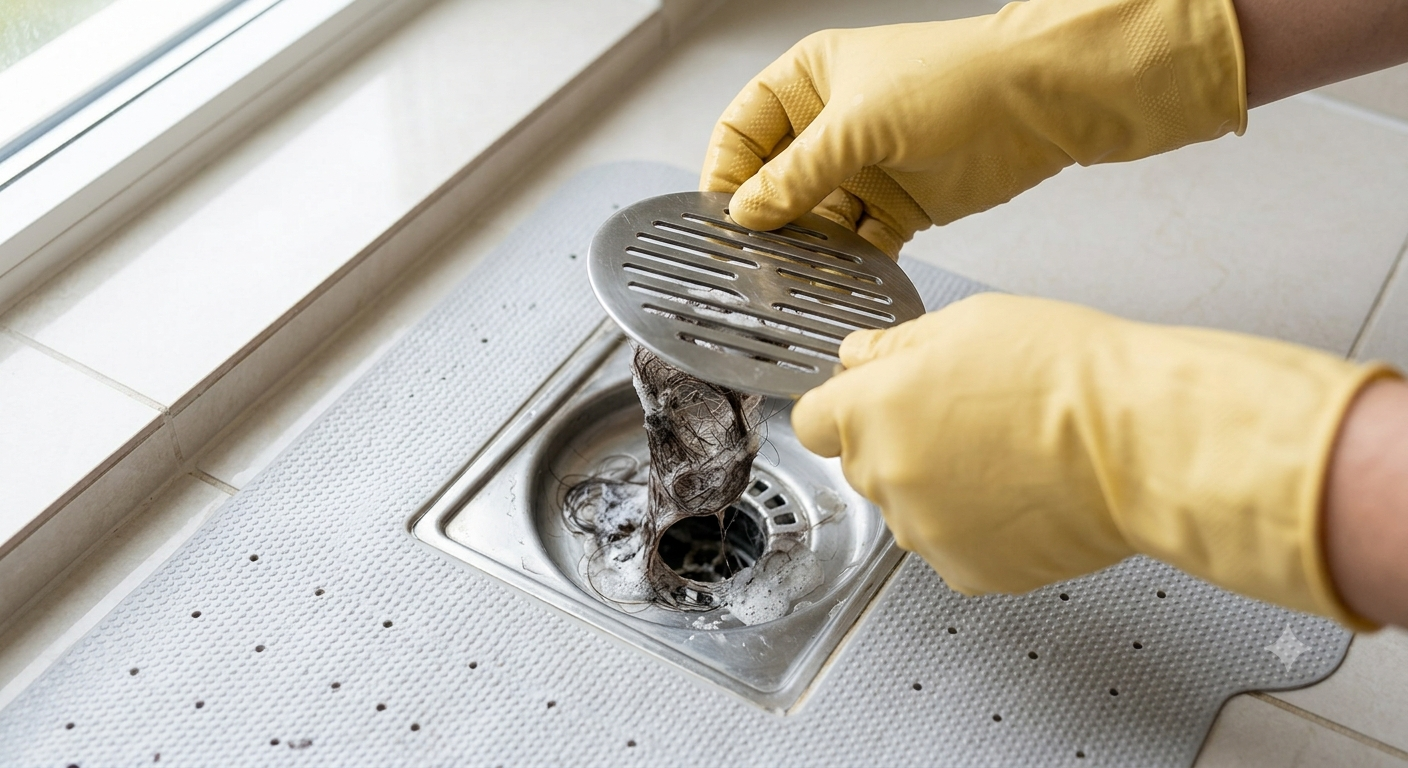
The trick is to know what a clogged shower drain looks like. A slow drain is the first indication.If your shower backs up, smells bad, makes odd gurgling sounds, or leaves water sitting on the floor, there’s a good chance the drain is choked with a mix of hair and soap residue. Learning how to clean shower drain buildup the right way can save you from bigger plumbing problems later.
Fortunately, more shower drains than not can be handled by DIY means – no chemical cleaners or specialty equipment necessary! For a large number of homes, a good old-fashioned routine cleaning, some direct hands-on work removing material buildup, and appropriate preventative measures can be more than enough to help water flow unimpeded through your shower drain. When clogs get serious or recur, that may be the signal to adopt a more focused cleaning solution.
Why Shower Drain Cleaning Matters
Here’s why a healthy drain goes above and beyond the simple job of transporting water: buildup of grime in the trap and on the pipe walls impedes flow and can trap odors, which stick to other debris and speed the clogging process even faster. That is why a ‘bit sluggish’ drain quickly becomes ‘fully plugged.’ Odor removal.
Hair, body oil, soap residue and other gunk can start building up in drains and producing a distinct stink, especially in bathrooms with no vents or a fan that isn’t vented outside.
That is another cause for cleaning out drains periodically. Maintenance. Clearing out grime before it builds into a thick layer can spare you from calling a plumber or paying for an emergency clog‑removal service down the line. For most readers on Grow With Home cleaning drains makes smart sense.
What Usually Clogs a Shower Drain
Very few shower drain clogs happen with a single “bam!” moment. More often than not, clogs accumulate gradually over time with everyday use.
In many bathrooms, hair is Public Enemy #1 because it naturally snagged on the draincover and the pipe itself and forms the initial platform upon which all of the other offenders pile.
Soap residue can be the culprit too: regular bars of soap or many types of shampoo, conditioner and body wash leave behind a filmy substance that solidifies with age and mineral deposits in the water, adding to the overall clogs in your drain. Many bathrooms also experience clogs due to hair, skin cells and even small pieces of shaving debris, bits of cosmetics and so on. If you share the shower, the clog is likely to occur even faster.
Best Way to Clean Shower Drain
You always want to try the simplest method first – get rid of any physical blockage first, rinse and disinfect the cover, and then you can try an inexpensive cleaner if there is still a clog and the water is slow to drain. The first approach to dealing with a clogged drain should always be to try it without using strong chemicals first. First step, if your drain cover comes off: Remove the cover and pull out any hair and other physical debris from the drain as you can with your bare hands, using a pair of gloves.
Wash the drain cover with warm water and dish detergent if necessary and re-insert it into the drain.
For a partial clog, run hot water through the drain for a few minutes to see if that will clear it. A baking soda and vinegar mixture also helps with minor buildup and odor in many cases. This can loosen a little grime but a drain clog of more significant magnitude may require more. You may be tempted to repeat the process of using a store-bought clog remover; a better idea than that for many drain clogs is to invest in a simple drain snake and simply extract the blockage.
Step-by-Step Drain Cleaning
First, make the area as safe and dry as you can. If you have any standing water in your shower pan, see if you can scoop it out, but have a towel within reach to avoid working on a slippery surface. If your shower has a stopper in place, lift it up or unscrew it if necessary.
Take off the drain cover and inspect the opening underneath for visible hair, soap scum, or other debris. A great many clogs are simply made of a tightly woven wad of hair at the top of the opening. Use your fingers or the tip of a pair of pliers to pull out any hair you can get at. Use a cloth or a small brush to wipe off any visible grime around the edges of the opening.
If there’s a buildup of grime on the inside surface of the opening and cover, clean it off before you continue. You can use a brush to scrape away soap buildup that sticks to metal or plastic surfaces. Once you’ve cleared off visible buildup, turn on your water to see if your shower begins to drain.
If your shower still does not drain properly, you’ll need a tool to get at deeper clogs in your drain line. Use a snake: insert the head into the drain opening and twist it as you push it slowly into the line, so the tool latches onto hair instead of pushing it further. Once the blockage has been removed, run warm to hot water to flush away loose debris.
How to Handle Odors
Bad shower drain smell often implies organic matter stuck within your drainpipe. It is able to consist of your hair, cleaning scum, or remaining substances that adhere to your own drain pipe trap. Scrubbing away that you can clearly see will be your first move, nevertheless, the stink might linger till you also cleanse the obstruction underneath your surface.
When the smell is actually mild, a mixture of baking soda and vinegar may be sufficient.
Just combine it and pour it in your drain, give it an hour and afterward rinse along with hot water. You ought not be applying this method when there’s a significant clogging problem, yet it’s an awesome preventative cleaning strategy.
Common Mistakes to Avoid
What Not to Do1. Don’t use harsh chemicals in a hurry. Potent drain cleaning chemicals can mar certain surfaces and aren’t typically required for the typical hair-based shower clog.
Even if you do use one, and it sits there in the pipe because the line didn’t completely clear the blockage, the chemical residue can be damaging.2.
Don’t just pour and walk away. If the hair is clustered toward the surface, a chemical will likely not do much good. Removing it mechanically often works more efficiently and quickly.3. Don’t use the wrong temperature water.
Really hot water is often good at dissolving greasy build-up, but can damage certain finishes, so using it for other problems (like a physical obstruction of hair) may not be your best strategy.
Prevention That Saves Time
The easiest way to keep from needing to have the drains cleaned on a regular basis is to cut down on how much actually enters the pipes in the first place. Placing a drain cover or hair catcher over the opening will catch far more debris than you realize is entering the pipes from the shower alone. Investing in that small item alone is often surprisingly effective.
You should also run hot water down the shower drain briefly each day when the shower is not in use, particularly if household members have long hair or if a lot of conditioner or other styling products are used.
This isn’t the same as cleaning, but it does slow the pace at which residue accumulates. A monthly cleaning session should be adequate in many situations. If your shower is used daily by multiple family members, or if long hair is often washed in the shower, it’s probably going to be more appropriate for you to have to have it cleaned more frequently.
Troubleshooting Persistent Clogs
If the water continues to go down slowly even after you have cleaned the cover and removed all visible hair, then the clog likely lies lower down in the pipe. Here is where a drain snake, plunger, or a plumbing technician may be of more assistance. By then, we’re talking about something in the pipe itself rather than on the surface. It is possible the problem isn’t related to debris buildup on the surface and instead stems from a trap or vent problem, which causes recurring odors.
Again, if the smell reappears after a cleaning, further work may be necessary. Similarly, in an older house, slow draining repeatedly may be the first indicator of pipe buildup.
If all of the methods above prove unsuccessful, it is best to reconsider your strategy rather than continue pushing through. Simply pushing the same method harder typically doesn’t solve a clog located deeper in the drain line, but it certainly wastes your time and time, and time the cleanup could become more inconvenient and frustrating.
Expert Perspective
From a maintenance standpoint, the smartest approach to how to clean shower drain buildup is to think in layers. Begin by removing the larger visible items, then tackle the gunk that has been accumulating. Only attempt the deeper line work if required. Working your way in like this is quicker, and often safer, than tackling the situation with powerful cleaners first.
Another factor worth considering is that shower drains fail more over time rather than all at once. Routine maintenance, such as regularly cleaning the cover and removing hair before it has the opportunity to cause a blockage, makes a far greater difference in the long run than heroic last-ditch efforts.
Let’s be honest, in the majority of cases, what most households want from their shower drain is not a perfect, never-ever blocked system, but a drain that will simply do its job. Keep it clear, odor-free, and free from surprising overflows. This is good drain maintenance in practice.
Conclusion
Knowing how to clean shower drain buildup is one of those home skills that pays off quickly. Once you understand what causes the clog, you can choose the right fix instead of guessing.In many cases, all it takes is a good clean-up, a bit of a maintenance check, and some prevention behaviors to keep everything flowing.
Should your drain just seem a little clogged or start giving off a bad odor, start by fixing what you can readily fix and work your way down. If you keep finding issues with your shower drain, view that as evidence of an issue you’re not seeing or able to get at. However, either way, maintenance is generally easier than trying to fix a completely blocked shower.
FAQs
How often should I clean my shower drain?
For most homes, a light cleaning once a month is a good baseline. If the shower is used heavily or sheds a lot of hair, you may need to clean it more often.
What is the easiest way to clear a shower drain?
The easiest first step is usually to remove visible hair and debris by hand, then rinse the drain with hot water. If that does not work, a drain snake is often the next best tool.
Can I use baking soda and vinegar in a shower drain?
Yes, it can help loosen light residue and reduce odors. It is not usually strong enough for a serious clog, though, so deeper blockages may need mechanical removal.
Why does my shower drain still smell after cleaning?
That usually means some buildup is still trapped deeper in the drain or trap. It can also happen if the clog has not been fully removed.
Should I use chemical drain cleaners?
They are usually not the first choice for shower drains. In many cases, safer methods like manual removal, a snake, or mild cleaning solutions are enough.
What if the drain keeps clogging again and again?
Recurring clogs often mean there is an underlying buildup or a deeper plumbing issue. If basic cleaning does not solve it, the problem may need a professional look.