
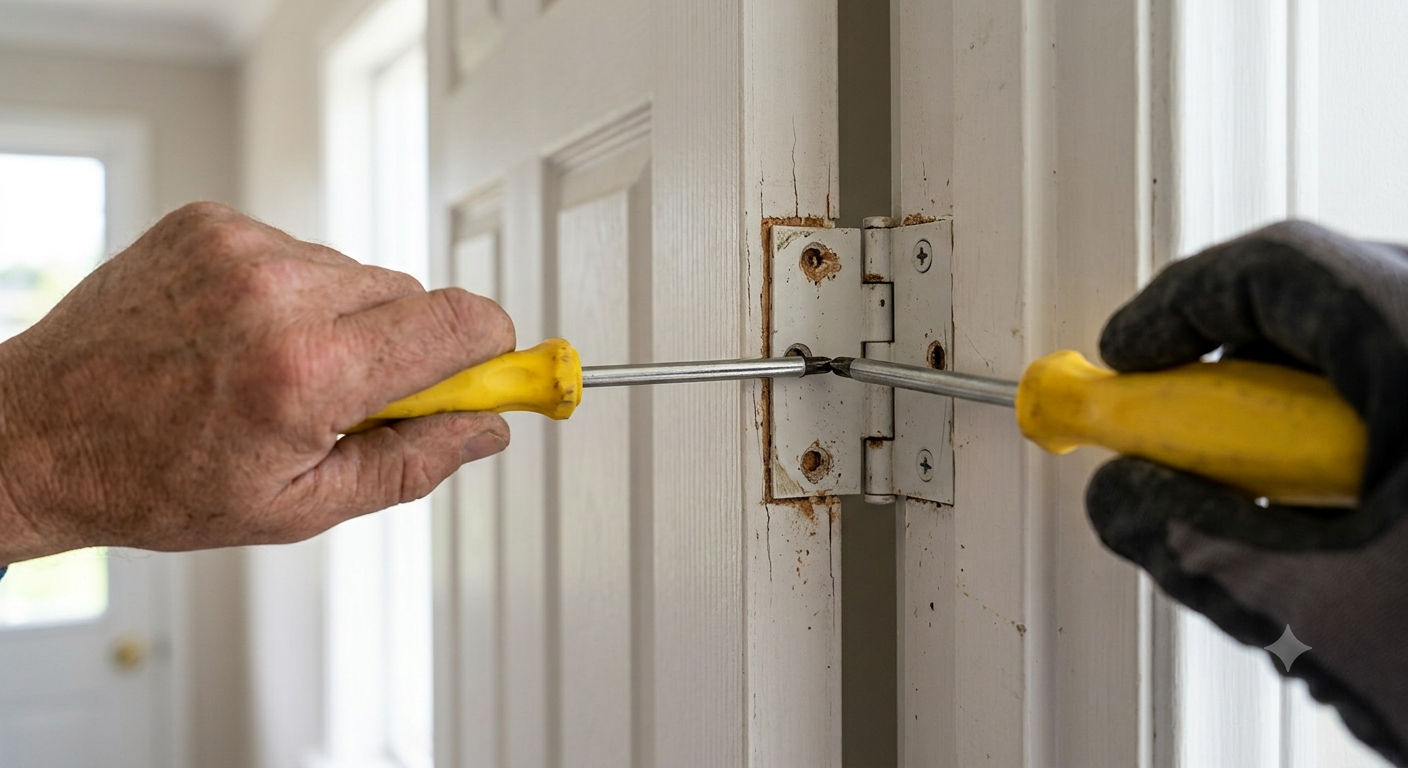
A squeaky door may seem like a small household annoyance, but that repeated creaking sound can quickly become frustrating, especially when it happens every time someone opens or closes a bedroom door, cabinet, or entryway. Many homeowners look up how to fix squeaky door issues because they want a quick fix without replacing the whole door or hiring a professional for a small problem.
Why Is My Door Squeaking and How to Fix It The most common reason for a squeaky door is simply friction between two metal components moving against each other – specifically, your door hinges. As time goes by, hinges accumulate dust, get dry and worn, can become misaligned, and get general wear and tear. Luckily, a lot of door squeak causes can be solved through simple maintenance and the proper technique. This article dives into exactly why your door is squeaking, how to determine where the source of the problem actually lies, easy-to-do solutions, what you should definitely not do to a squeaky door, and pro-tips to help prevent future squeaks.
Why This Topic Matters
Most of the time you can live with a squeaky door, as it generally doesn’t affect the functionality of the door. However, out-of-the-ordinary noises are typically a warning sign that different parts of the door hinge are coming into contact with each other, when they’re not supposed to. The mechanical interface between a heavy door and its frame is designed to move silently tens of thousands of times.
If lubrication wears off, dirt builds up, or hinges lose alignment, then a significant increase in friction between these parts begins to generate the vibration that we call noise, or a squeak.
A squeaky hinge you ignore over the years is unlikely to be the direct cause of severe door problems, but it is likely the cause of the following:
- Faster hinge wear
- More difficult door movement
- Loose hinge screws
- Uneven door alignment
- Increased stress on the door frame
So if you hear a bedroom door that’s becoming more difficult to shut than it used to, there might not be anything wrong with the door after all. Perhaps the problem is as simple as a loose hinge. Knowing why you’re hearing that creak can save you time and money on needless repairs.
Understanding Why Doors Squeak
Before learning how to fix squeaky door issues, it is important to understand what creates the sound.
A typical door hinge contains several moving parts:
- Hinge plates attached to the door and frame
- A hinge pin connecting the plates
- Small spaces where movement occurs
When the door moves, the hinge pin rotates inside the hinge knuckles. If these surfaces are dry or contaminated, friction increases.
The squeaking sound usually comes from:
- Metal rubbing against metal
- Lack of proper lubrication
- Dirt trapped inside hinge components
- Loose screws causing movement
- Door weight pulling the hinge unevenly
Sometimes people assume the door itself is the problem, but the noise is usually coming from the hinge system.
Common Causes of a Squeaky Door
Dry Door Hinges
No Lubrication The most frequent culprit for the noise is quite straightforward. Lack of lubrication! Because the hinge hardware is exposed to air, dirt and temperatures in a house or office building, the grease or oil used in its manufacturing or installation deteriorates and stops working, resulting in friction when the door swings. It’s really the same principle that applies to any metal object, like the chain on your bicycle for instance, if the chain is not lubricated, it squeaks.
Dust and Dirt Buildup
Even indoor doors collect small particles.
Dust can enter the small spaces between hinge components and interfere with smooth movement.
This is especially common in:
- Older homes
- High-traffic areas
- Doors near kitchens
- Exterior doors exposed to outdoor air
Cleaning the hinge before applying lubricant can often improve results.
Loose Hinge Screws
A door hinge depends on secure attachment.
When screws slowly loosen, the hinge can shift slightly each time the door opens or closes. That movement creates additional friction and noise.
Loose screws can also cause:
- Door sagging
- Uneven gaps around the frame
- Difficulty latching
A quick screw inspection is an important part of diagnosing the problem.
Door Alignment Problems
Not every squeak comes from the hinge itself.
Sometimes the door has shifted because of:
- Building movement
- Loose hardware
- Heavy doors putting stress on hinges
- Changes in humidity affecting wooden doors
An incorrectly aligned door may rub against the frame, creating squeaking, scraping, or resistance.
How to Fix Squeaky Door Problems Step by Step
Start by Finding the Exact Source of the Sound
Before applying anything, identify where the noise is coming from.
Open and close the door slowly while paying close attention to the sound.
Check:
- Upper hinge
- Middle hinge
- Lower hinge
- Door edge touching the frame
Many people immediately spray lubricant on every visible part, but finding the exact source makes the repair cleaner and more effective.
Clean the Hinge Area First
A common mistake is applying lubricant over dirt.
While lubrication may temporarily reduce the sound, trapped dust can continue causing friction.
Use:
- A dry cloth
- Soft brush
- Cotton swab for small areas
Remove visible dirt around the hinge before moving to the next step.
Apply the Right Lubricant
The correct lubricant can make a major difference.
A good hinge lubricant should:
- Reduce friction
- Stay in place
- Protect metal surfaces
A household lubricant made for moving metal parts will often do the job fine. Apply directly onto the area that moves. You don’t need to drown the hinge in the stuff though, it will collect dust and make a mess.
Move the Door Back and Forth
Once sprayed with the lubricant, open and close the door multiple times to ensure the spray spreads throughout the hinge.
If the squeaking has eased but not disappeared, add a little more of the lubricant. Do be aware it can take a little while for lubricant to penetrate the hinge components.
Tighten Loose Screws
If lubrication didn’t work, check the screws on the hinge. Any loose screws create unwanted play, and as the hinge swings open and closed the problem may resurface. Use the correct screwdriver and gently tighten each screw. Overtightening may be detrimental especially on wood, and strip the screw hole.
Remove the Hinge Pin for Deeper Maintenance
For stubborn squeaks, removing the hinge pin can provide better access.
The general process involves:
- Supporting the door
- Carefully lifting the hinge pin
- Cleaning the hinge components
- Applying lubricant
- Reinstalling the pin
This method is more involved but can help when surface lubrication does not reach the problem area.
For heavy doors, having someone assist can prevent unnecessary strain on the hinges.
How to Fix Squeaky Door: 9 Simple Solutions, Common Mistakes, and Expert Tips
Fixing Different Types of Squeaky Doors
Not every door has the same cause of noise. The solution often depends on the type of door, its location, and how frequently it is used.
Understanding these differences helps prevent unnecessary repairs.
How to Fix a Squeaky Interior Door
Interior doors, such as bedroom and bathroom doors, are usually easier to fix because the problem is commonly related to hinge maintenance.
Most interior door squeaks come from:
- Dry hinges
- Loose hinge screws
- Dust buildup
- Normal aging
If you want to give it a go, there’s a good chance a bit of cleaning and oiling will fix it. If it’s hard to close, or rubs against the doorframe, first double check it’s not misaligned – the hinges aren’t necessarily the problem here. A bedroom door, for instance, might squeak when almost fully closed due to friction with the doorframe, not faulty hinges.
How to Fix a Squeaky Exterior Door
Exterior doors experience more environmental exposure than indoor doors.
They are affected by:
- Rain
- Temperature changes
- Outdoor dust
- Humidity
Because of this, exterior door maintenance may require more frequent attention.
When fixing an exterior door:
- Check hinges for rust or corrosion.
- Inspect screws for loosening.
- Make sure weather stripping is not creating resistance.
- Confirm that the door closes evenly.
A squeaky front door may sometimes indicate a larger adjustment issue rather than just a lubrication problem.
How to Fix a Squeaky Wooden Door
Wooden doors can change shape slightly over time because wood responds naturally to moisture changes.
Seasonal expansion and contraction may cause:
- Door rubbing
- Tight spaces around the frame
- Increased pressure on hinges
As a test, find out if the squeak is related to any movement of the hinge or if the door is rubbing against the door frame. Most wooden doors will come to life with the proper treatment of hinges, or a door frame to door adjustment.
Troubleshooting: Why Is My Door Still Squeaking?
Sometimes people apply lubricant and expect an immediate permanent solution. If the noise continues, the cause may be different.
Use this troubleshooting guide:
| Problem | Possible Cause | Solution |
| Door squeaks after lubrication | Lubricant did not reach internal hinge areas | Work lubricant deeper into moving parts |
| Squeak returns quickly | Hinge may have wear or damage | Inspect hinge condition |
| Door makes rubbing sounds | Door alignment issue | Check frame contact points |
| Door feels loose | Screws or hardware may be moving | Tighten hardware |
| Squeak occurs only in certain positions | Door may be shifting under pressure | Inspect hinge alignment |
The key is identifying whether the problem is friction, movement, or alignment.
Common Mistakes People Make When Fixing Squeaky Doors
Many DIY repairs fail because people focus only on stopping the sound temporarily.
Using Too Much Lubricant
A common mistake is assuming more lubricant means better results.
Excess lubricant can:
- Attract dust
- Create stains
- Make cleaning harder
A small amount applied correctly is usually more effective.
Ignoring Loose Screws
Other folks grab lubricant right away – before looking closely at the hinge attachment. If the hinge itself is actually moving, the lubricant is merely gonna be considered a temporary fix, since moving the hinge causes other alignment issues that are only gonna worsen in time.
Using the Wrong Products
It’s important to remember that not all household liquids work well for door hinges. If it seems that your doors may run quiet temporarily it doesn’t necessarily mean they will have long term benefits. A mechanically sound product may be your best bet, as they’re manufactured to decrease friction between parts that move against one another.
Forcing a Stuck Hinge
If you try and force a hinge pin with lots of effort you may snap the hardware or bend the pin. Instead try and apply a few tried and tested maintenance methods.
Professional Tips for Long-Term Door Maintenance
Experienced home maintenance professionals often focus on prevention rather than waiting until a problem becomes annoying.
A few simple habits can keep doors working smoothly.
Inspect Hinges During Regular Home Maintenance
Doors are used every day, but their hardware is often ignored.
During routine home checks, look for:
- Rust
- Loose screws
- Unusual movement
- Changes in door alignment
Small adjustments early can prevent larger issues later.
Pay Attention to New Sounds
A new squeak is easier to solve than a long-term mechanical problem.
If a door suddenly becomes noisy after years of quiet operation, something has likely changed.
Possible causes include:
- Hardware loosening
- Environmental changes
- Increased stress on the hinge
Treating the sound early usually requires less effort.
Maintain Heavy Doors Carefully
Large doors, security doors, and solid wood doors place more pressure on hinges.
These doors may need more frequent inspection because their weight creates greater stress on mounting points.
A small hinge problem can become more noticeable when supporting heavier materials.
Expert Insight: Why Simple Maintenance Works
A door hinge may seem simple but it applies the same mechanical laws as more complicated machines. Any two moving surfaces create friction, resulting in heat, friction, wear and tear. The addition of a lubricant alleviates this friction by promoting a smoother flow. But that’s only half the maintenance process.A professional evaluation would look at:
- Cleanliness
- Alignment
- Hardware condition
- Environmental factors
This is why simply spraying lubricant without checking the door condition does not always provide a permanent solution.
Real-Life Example: Solving a Persistent Bedroom Door Squeak
A homeowner noticed that their bedroom door had developed a loud squeak over several months.
The first attempt was spraying lubricant on the visible hinge area, but the noise returned after a few days.
After closer inspection, the actual problem was a slightly loose upper hinge screw. Each time the door moved, the hinge shifted slightly and created additional friction.
The solution involved:
- Tightening the hinge screws
- Cleaning the hinge area
- Applying a small amount of lubricant
The lesson from this example is that identifying the source matters more than applying a quick temporary fix.
Comparison: Quick Fixes vs Proper Door Maintenance
| Quick Approach | Proper Maintenance Approach |
| Spray lubricant immediately | Identify the cause first |
| Ignore loose hardware | Check screws and alignment |
| Repeat temporary fixes | Solve the underlying issue |
| Apply large amounts of product | Use controlled application |
| Focus only on noise | Protect the entire door system |
A quiet door is not only about removing an annoying sound. It is also about keeping the hardware functioning correctly.
Conclusion
Learning how to fix squeaky door problems does not usually require complicated tools or major repairs. In most situations, the cause is related to dry hinges, loose hardware, dirt buildup, or minor alignment issues.
What’s Best to Do Best practice, as we see, is to get to the root of the issue, use the correct upkeep method, and stop utilizing the stopgap solutions that just delay a visit from the handymen. It’s one of the most constantly made use of components of any home so keeping the maintenance as basic as possible will save the door years of wear and tear. By cleaning the hinges, looking into any looseness of screws and dealing with issues as soon as they appear you might be able to save your family the bother of those aggravating noises for good.
Frequently Asked Questions About How to Fix Squeaky Door
Why does my door squeak even after applying lubricant?
After oiling your squeak and it still returns, you may have a more complex issue. Perhaps your door is loose in its hinges, the hinges are worn or dirty inside or your door is binding in its frame.
Can I fix a squeaky door without removing the hinge pin?
Yep. Just about all squeaky doors can be remedied just by lubricating without even taking out the pin-just have the pin removed in cases of really hard cases.
.
How often should door hinges be lubricated?
As there is no set amount, this really depends on usage and the environment. A door used frequently may need more maintenance than one used sparsely. I would recommend doing a quick check of hinges if you ever notice it’s getting tight or squeaky.
Why does my door squeak only in certain weather?
When humidity and temperature change, your door — especially if it is wooden — may swell or shrink slightly. This could affect the door’s fit.
Is a squeaky door a serious problem?
Most of the time a squeaky door is simply a maintenance task. But if that squeak is accompanied by trouble shutting, visible wobble, or broken hinges, you may have bigger issues.
What is the easiest way to fix a squeaky door?
The simplest answer is to locate the problematic hinge, apply some degreaser, give it some lube, and to see if your screws are tight.