
A door that no longer closes properly, rubs against the frame, or leaves uneven gaps can quickly become a frustrating household problem. Many homeowners search for how to fix a sagging door because they notice that a once-perfectly working door has slowly started dragging, sticking, or becoming difficult to latch.
This May Be All the Work Required You Don’t always need to purchase a whole new door when yours is sagging. Loose hardware, badly fitting hardware, shifts in your house settling or any one of a variety of things can affect how a door hangs. Often, simply diagnosing and fixing the issue is all that’s necessary to make it operate properly again.
In this tutorial we will explore some of the common reasons why doors may sag and how to go about solving the problem and how to avoid them.
Why This Topic Matters
Perhaps the part of your house that receives the most traffic. An everyday household door can be operated upwards of thousands of times per year. All of those doors are hard at work: forcing the hinges to turn and the screws to turn as the door swings open and shut. A slight misalignment of the door itself might appear to be no big deal, but neglect can cause much larger issues to arise.
A sagging door can lead to:
- Difficulty opening or closing
- Damaged latch mechanisms
- Increased stress on hinges
- Scratches on flooring or carpet
- Gaps that affect comfort and privacy
- Uneven wear on the door frame
Consider for instance if your bedroom door always gets jammed before shutting and you feel you have to muscle it shut – you may not actually have a lock issue. Instead, you might have a hinge on top that has loosened a bit and the door sagged down over time. Catching problems early on not only saves you from unnecessary repair bills but it saves the overall integrity of the door.
Understanding What Causes a Door to Sag
Before learning how to fix a sagging door, it is important to understand what is actually happening.
A properly installed door hangs vertically from its hinges. The hinges support the weight of the door while allowing smooth movement.
Over time, several things can change this balance.
Loose Hinge Screws
The top reason a door may be drooping:loose hinge screws. If the screws that attach the door hinges start to come out over time, they will no longer make full contact with the door frame. A hinge, bearing all of the door’s weight, only needs to come out a bit for it to drop and sag.
This is especially common with:
- Heavy wooden doors
- Frequently used doors
- Older homes
- Doors installed with short screws
Many homeowners assume the door itself has changed shape, but loose hardware is often the simpler explanation.
Worn or Damaged Hinges
Worn or Damaged Hinges can often be repaired or replaced more effectively when you understand the different Types of Door Hinges and how each is designed to support specific door weights.
Door hinges are built for constant movement, but they can still loosen or wear down over time.
Signs of hinge problems include:
- Visible rust
- Loose hinge pins
- Excessive movement
- Squeaking combined with sagging
- Uneven hinge alignment
A worn hinge may not hold the door in its original position anymore.
Incorrect Hinge Installation
Sometimes a door begins sagging because the original installation was not properly balanced.
Common installation problems include:
- Hinges not aligned vertically
- Screws not penetrating enough into the frame
- Incorrect hinge placement
- Poorly supported heavy doors
These problems may not appear immediately but can become noticeable after months or years of use.
Changes in the Door Frame
The door frame itself can shift due to environmental conditions.
Wood naturally responds to changes in:
- Humidity
- Temperature
- Moisture levels
In some homes, seasonal changes can slightly affect how a door fits within its frame.
A door that closes smoothly in one season may start sticking or dragging in another.
Excessive Door Weight
Some doors are naturally heavier than standard interior doors.
Examples include:
- Solid wood doors
- Large entry doors
- Security doors
- Decorative oversized doors
If the hinges were not designed to support the weight properly, sagging can develop over time.
How to Fix a Sagging Door Step by Step
Inspect the Door Before Making Adjustments
The first step is identifying where the problem actually comes from.
Open and close the door slowly while watching for where it catches or shifts.
- Where the door touches the frame
- Whether gaps are uneven
- Which hinge appears loose
- Whether the latch lines up correctly
A door that rubs near the top corner usually points toward hinge-related sagging.
A door that rubs along the entire edge may have a different alignment issue.
Taking a few minutes to inspect the door can help you avoid making unnecessary adjustments.
Tighten the Existing Hinge Screws
The simplest fix is tightening screws. – Secure screws properly using a screwdriver that fits the head of the screw or turn it yourself. Check that the screws for the top hinge on both doors is secure since the top hinge takes the bulk of the weight. Do not over tighten. This will damage the head of the screw or strip out the wood in the screw hole.
Replace Short Screws With Longer Ones
Replacing the screws in one or more hinges with longer ones is one of the simplest solutions to a wide range of door sag. Many times, the short screws will only bite into the top skin of the frame, and after years of door use, they’ll work loose. Longer screws will penetrate past this skin and into the structural framework of the wall behind the jamb, giving you a much more solid anchoring for the hinges.
When replacing screws:
- Use screws that fit the hinge properly.
- Avoid damaging the hinge finish.
- Ensure the screw sits flush with the hinge plate.
Check and Adjust the Top Hinge
The upper hinge usually has the greatest influence on door sag.
When a door drops downward, the top hinge often moves slightly away from its original position.
Inspect the top hinge for:
- Movement when pushing the door
- Loose mounting points
- Uneven gaps
Strengthening the top hinge connection can often restore proper alignment.
Repair Stripped Screw Holes
Sometimes tightening screws does not work because the surrounding wood has become damaged.
This happens when screws repeatedly loosen and enlarge the hole.
A simple repair may involve:
- Removing the loose screw
- Filling or reinforcing the damaged area
- Allowing the repair material to set
- Installing the screw again
The goal is to create a stronger surface for the screw to grip.
Adjust the Door Hinges Carefully
Hardware adjustment If the problem persists even after Tightening the Existing Hinge Screws is usually the first repair to try, but if the problem is caused by worn hardware rather than loose screws, a guide on Door Hinge Repair can help you identify the next steps.
Adjusting a hinge can have a noticeable effect on the door’s placement, so make minor adjustments to the hinges. Don’t aggressively bend the hinges, as this could damage the hardware and cause the door to be out of alignment again. This type of door adjustment is more crucial if you have an expensive door, antique door, or a solid entrance door.
Advanced Solutions for a Sagging Door
The more serious solution of more elaborate adjustment is usually in order when the simple tightening and screw-turn fixes fail to get the job done. The exact adjustment that will work comes as a result of your determination of which particular element-frame, door, or hinges-is to blame for the sticking.
Replace Damaged Hinges
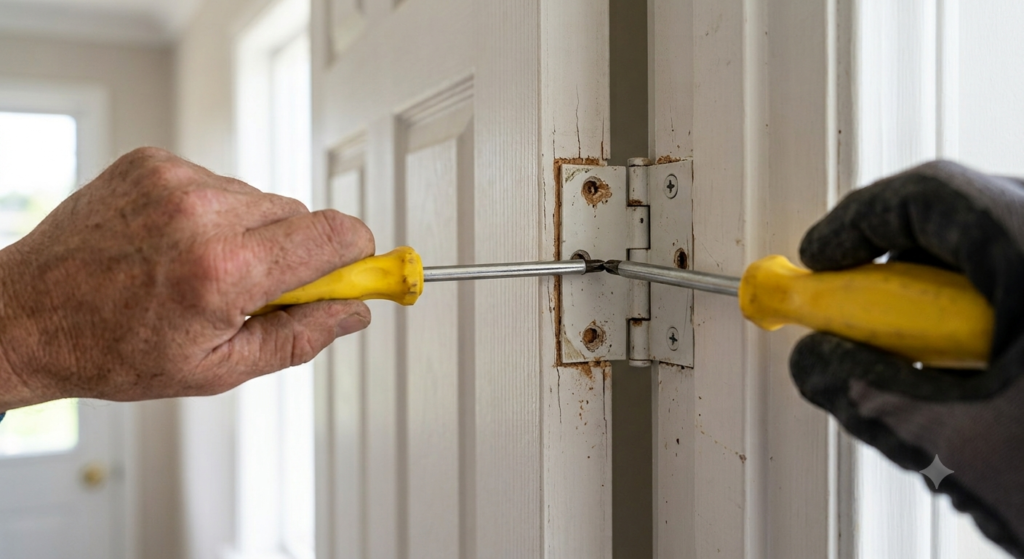
If the hinges are bent, rusted, or worn out, tightening screws may only provide a temporary improvement.
A damaged hinge can allow the door to shift because it cannot properly support the weight.
When inspecting hinges, look for:
- Cracks in the metal
- Loose hinge pins
- Uneven movement
- Excessive side-to-side play
Replacing a worn hinge with one that matches the original size and strength can restore proper support.
A common mistake is replacing only one hinge without checking the others. Since all hinges work together, the entire hinge system should be inspected.
Add Support to Heavy Doors
Some doors naturally put more pressure on their hardware.
Examples include:
- Solid wood entry doors
- Large decorative doors
- Older heavy interior doors
If your door is still sagging every time after adjustments are made on it, then perhaps you should blame it on the fact that your hinge is too weak to hold up that door. In this situation, it might require replacing your hinge or supplementing strength for them. They take into account how heavy the door is unlike manyDIY hacks.
How to Fix a Sagging Door That Rubs the Frame
A common sign of sagging is a door that rubs against the frame.
The location of the rubbing often provides clues.
Rubbing Near the Top Corner
This usually indicates the door has dropped slightly because of hinge movement.
Possible solutions:
- Tighten upper hinge screws
- Strengthen the hinge connection
- Check hinge alignment
Rubbing Along the Bottom Edge
This may happen because the door has shifted downward.
Possible causes include:
- Sagging hinges
- Loose screws
- Door weight affecting alignment
Before sanding or trimming the door, confirm that the hinges are not the actual problem.
Many homeowners remove material from the door too quickly when a simple hardware adjustment could solve the issue.
Door Will Not Latch Properly
If the latch no longer lines up with the strike plate, the door may have moved slightly out of position.
Check:
- Door alignment
- Hinge condition
- Strike plate position
Sometimes the latch problem is a symptom of sagging rather than the main issue.
Troubleshooting Guide for Sagging Doors
| Problem | Likely Cause | Recommended Solution |
| Door drops after opening | Loose hinges | Tighten or replace screws |
| Door touches upper frame | Door sagging from hinge side | Adjust top hinge support |
| Screws keep becoming loose | Damaged screw holes | Repair holes and reinstall screws |
| Door remains uneven after adjustments | Frame movement or installation issue | Inspect alignment |
| Heavy door continues sagging | Insufficient hinge support | Consider stronger hardware |
A proper diagnosis saves time because not every door problem requires the same repair.
Common Mistakes People Make When Fixing Sagging Doors
Tightening Only the Bottom Screws
The screws that are the easiest to access tend to get all the attention. Unfortunately, most of the door’s weight rests upon the upper hinge. And as a result, it may continue to malfunction even if the screws were all tightened.
Removing Material From the Door Too Soon
If your door sticks on the frame, the first instinct for some homeowners is to shave off the offending edge. For the most part, this creates a modification to the door itself, that might not even be necessary. Often times, if your door binds, and you trim the frame edge off to allow it to move smoothly, you’re covering up the problem with no resolve in sight; a problem such as a wobbly hinge!
Using Short Replacement Screws
Just screwing in replacement screws of the same short size may not provide a long-lasting repair. If the original screws failed because they didn’t find a secure material on the other side of the frame, then simply repeating the repair again will do no good.
Ignoring Small Changes
A door rarely becomes severely sagging overnight.
Small signs often appear first:
- Slight rubbing
- A small gap change
- A latch that requires extra pressure
Addressing these early prevents more complicated repairs later.
Expert Tips for Preventing Door Sagging
Professional home maintenance often focuses on prevention because small adjustments are easier than major repairs.
Inspect Hinges During Routine Maintenance
A quick inspection every few months can reveal early problems.
Check whether:
- Screws are secure
- Hinges move smoothly
- The door closes naturally
- Gaps around the frame remain even
Early attention can extend the life of the door and hardware.
Use Quality Hardware During Installation
The long-term performance of a door depends heavily on the quality of its hinges and installation.
A lightweight hinge on a heavy door may create problems over time.
Proper hardware selection should consider:
- Door weight
- Door size
- Usage frequency
- Environmental conditions
Avoid Hanging Excess Weight on Doors
Many people attach items such as:
- Heavy organizers
- Large decorations
- Storage racks
to doors without considering the additional stress.
Extra weight increases pressure on hinges and can accelerate sagging.
Professional Insight: Why Doors Sag Over Time
A door is a moving structure connected to a stationary frame. Every opening and closing cycle creates small amounts of stress on the hinge system.
Over time, several forces work together:
- Gravity pulls downward on the door.
- Movement creates pressure on screws and hinges.
- Environmental changes affect materials.
- Daily use gradually loosens connections.
This does not necessarily indicate poor construction. Even well-installed doors require occasional maintenance because mechanical parts naturally experience wear.
Real-Life Example: Fixing an Office Door That Would Not Close
A small office door began rubbing against the upper frame and required force to close.
The initial assumption was that the wooden door had expanded. However, inspection showed that the top hinge screws had loosened over time.
The repair involved:
- Removing loose screws
- Reinforcing the hinge connection
- Installing stronger screws
- Checking alignment
After adjustment, the door returned to normal operation.
The important lesson was that the visible problem was not always the actual cause. Proper diagnosis prevented unnecessary modification of the door.
Comparison: Temporary Fixes vs Long-Term Door Repairs
| Temporary Approach | Long-Term Solution |
| Forcing the door closed | Correcting alignment |
| Sanding the door immediately | Checking hinges first |
| Tightening loose screws repeatedly | Strengthening the hinge connection |
| Ignoring hardware wear | Replacing damaged components |
| Adjusting symptoms | Solving the actual cause |
A successful repair focuses on restoring balance rather than simply making the door work for a short time.
Conclusion
Learning how to fix a sagging door starts with understanding that the problem is usually related to alignment, hinge support, or hardware movement rather than the door itself.
In many cases, simple repairs such as tightening screws, improving hinge support, or replacing worn components can restore proper function. The most important step is identifying the real cause before making changes.
A well-maintained door should open smoothly, close easily, and sit evenly within its frame. By paying attention to small warning signs and performing basic maintenance, homeowners can prevent minor alignment issues from becoming larger repair problems.
Frequently Asked Questions About How to Fix a Sagging Door
Why does my door sag even after I tighten the screws
Screws adjusted, and the door is still slumping down: either the doorframe has moved, the hingeholes are damaged, or the hinges have simply become worn. You may need to resort to heavier duty screws, or take additional steps to realign your door.
Can I fix a sagging door myself?
Several minor issues with doors sagging on hinges can often be remedied with simple hand tools and a good visual check of the hinges and jamb. But doors that are quite heavy, frame damage, or extremely tricky alignment can involve the need for higher skill levels.
Why is my door rubbing at the top corner?
If the door is rubbing at the upper corner, the problem is usually that the hinges have shifted slightly or the door has dropped a bit.You’ll generally want to check the top hinge first.
Should I replace the door if it is sagging?
No, not always. Numerous Sagging doors are simple to fix by fixing the hinges or hardware or realigning the frame. Replacing a door is generally a solution reserved for door frames or doors which have been irreparably damaged.
How often should I check door hinges?
There is no strict schedule, but inspecting hinges during regular home maintenance can help identify problems before they become serious.
Can humidity cause a door to sag?
Wooden doors and doorframes can expand and contract when humidity levels fluctuate, which does not always equal a true sag but can influence the way the door closes within the frame. Understanding Wood Movement can help explain why doors change with seasonal conditions.