
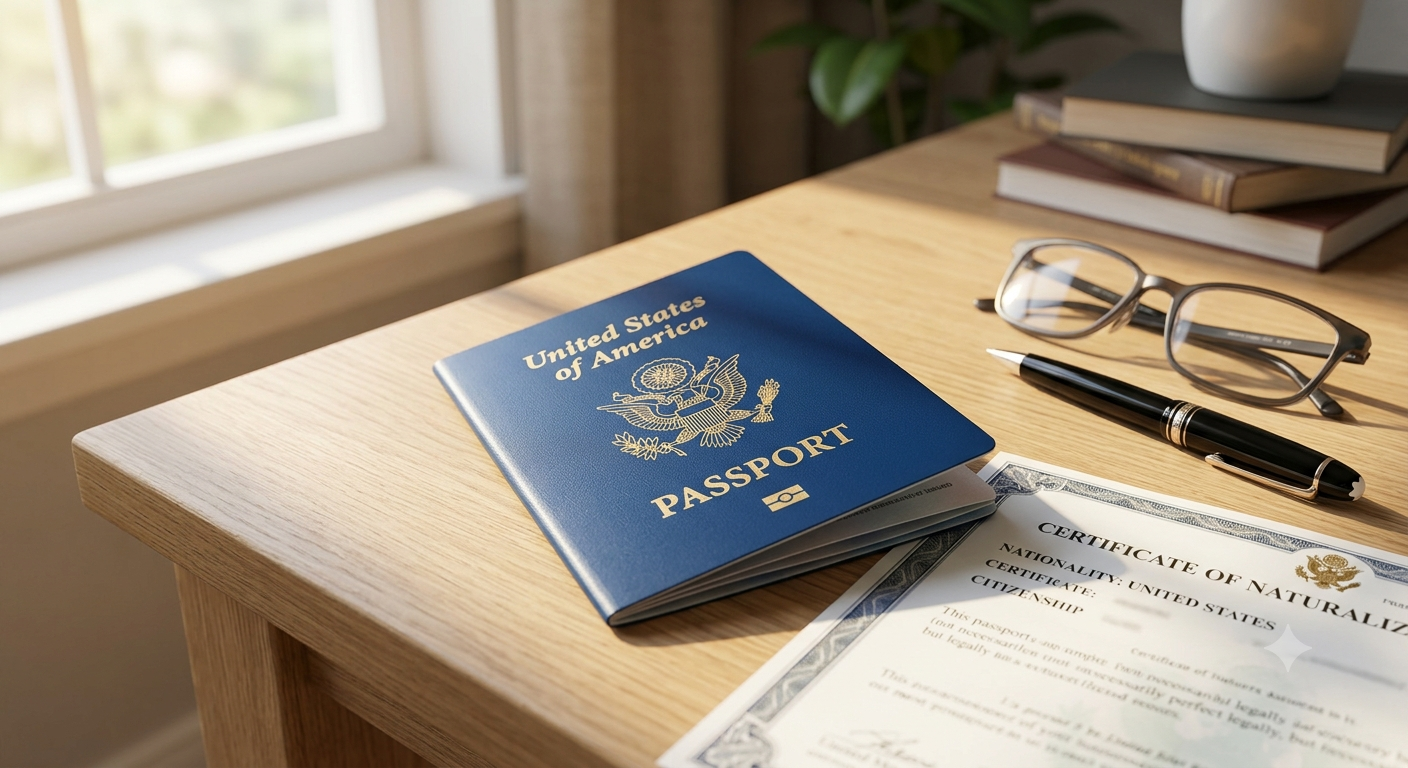
Those searching for “nacionalidad estadounidense” generally seek information about what nationality of the United States is, how to obtain nationality, for whom it is granted, and what the benefits are. It is true that many use the words nationality and citizenship interchangeably; however, nationality has several meanings for the laws of the United States, and in order to avoid problems, we must clarify the nationality to apply for the immigration of family members, the ability to travel with freedom, or to have a United States passport.
No matter if you were born in the United States, born in another country of parents belonging to the United States, or are a holder of a Green Card, and in any case, you want to acquire American nationality. We will offer you a brief but clear guide, using common language but respecting the exact terminology of the nationality in the United States of America.
What Does “Nacionalidad estadounidense” Mean?
“Nacionalidad estadounidense” means a person’s nationality of the United States. Nationality means the relationship between a person and their country and ensures that person receives protections under the United States law, which may in many instances, be accompanied by some of the rights of citizenship.
While these two concepts are generally interchangeable, there is an important legal difference between nationality and citizenship.
All U.S. Citizens are also U.S. Nationals, but not all U.S. Nationals are U.S.
Citizens.
People are often surprised when learning of this difference, as it usually affects very few Americans. Most people who say “nacionalidad estadounidense” really mean full citizenship. Nevertheless, it is good to know how they differ for the sake of immigration or any government documents that you might come across.
Why Understanding Nacionalidad estadounidense Matters
For millions of people around the world, nacionalidad estadounidense represents more than a legal status. It provides security, international recognition, and access to opportunities that can affect education, employment, travel, and family life.
Understanding this concept is important because it helps people:
- Determine whether they already qualify for U.S. nationality.
- Understand eligibility for naturalization.
- Complete immigration forms correctly on growwithhome.com.
- Know their legal rights and responsibilities.
- Avoid costly mistakes during immigration processes.
Many immigration cases become more complicated simply because applicants misunderstand the difference between nationality, citizenship, and permanent residency.
Nationality vs. Citizenship vs. Permanent Residency
One of the biggest areas of confusion involves these three legal terms.
| Status | Meaning |
| Nacionalidad estadounidense | A legal connection between a person and the United States. |
| U.S. Citizenship | Full legal membership in the United States with political rights. |
| Permanent Residency (Green Card) | Permission to permanently live and work in the United States without becoming a citizen. |
A Green Card holder enjoys many legal protections but remains a citizen of another country unless they later become naturalized.
A U.S. citizen, on the other hand, possesses both citizenship and nacionalidad estadounidense, along with the full constitutional protections provided under federal law.
Who Can Have Nacionalidad estadounidense?
There are several legal pathways to obtaining nacionalidad estadounidense.
Birth in the United States
The most common method is birth within the United States.
According to jus soli, or the right of soil, all children born in the U.S. Are considered U.S. Nationals and U.S.
Citizens, whether or not their parents are citizens or are lawfully present in the country, with a few narrow exceptions (such as children of accredited foreign diplomats).
It is an ancient right protected in the U.S. Constitution for over a hundred years in the Fourteenth Amendment. This right has been protected for over a hundred years under the Fourteenth Amendment of the U.S. Constitution.
Birth Abroad to American Parents
A person does not necessarily need to be born inside the United States to receive nacionalidad estadounidense.
Children born overseas may automatically acquire U.S. nationality at birth if one or both parents are U.S. citizens and meet specific physical presence requirements established by immigration law.
The exact rules depend on several factors, including:
- The child’s birth date.
- Whether one or both parents are U.S. citizens.
- Whether the parents were married.
- How long the U.S. The U.S. citizen parent had established residence in the United States before the child was born.
Because these requirements vary, each case is evaluated individually.
Through Naturalization
Naturalization is the legal process that allows eligible immigrants to obtain nacionalidad estadounidense through U.S. citizenship.
Applicants generally must:
- Be lawful permanent residents.
- Meet continuous residence requirements.
- Demonstrate good moral character.
- Pass English and civics examinations unless exempt.
- Take the Oath of Allegiance.
Once naturalization is approved, the applicant officially becomes both a U.S. citizen and a U.S. national.
Citizenship Through Parents
Some children automatically obtain nacionalidad estadounidense after birth because one or both parents become U.S. citizens before the child reaches adulthood.
This process is commonly called derived citizenship.
Eligibility depends on several legal requirements, including:
- The child’s age.
- Permanent resident status.
- Legal custody.
- The parents’ citizenship status.
Because derived citizenship occurs automatically in qualifying situations, some individuals may already be U.S. citizens without realizing it.
Rights Associated with Nacionalidad estadounidense
Possessing U.S. Nationality brings with it some serious benefits, rights, and opportunities – it’s about far more than just having an American passport! A few of the most obvious rights associated with U.S.
Nationality includes: The right to be protected by the U.S.
The government when traveling abroad. The right to be eligible to apply for federal employment for many jobs. The right to petition for immigration benefits for a select group of family members. The right to be protected under the protections granted by U.S.
Law and its Constitution.
In addition to rights available to lawful permanent residents, nationality affords additional opportunities including: The right to vote in federal elections. The right to serve on juries if called upon. The right to run for most public office positions.
Of course, all these rights are accompanied by a few important responsibilities.
Responsibilities That Come with Nacionalidad estadounidense
The path to US citizenship also entails legal responsibilities that every applicant is presumed to fulfill. Some common responsibilities are to respect and abide by all federal, state, and local laws, pay all the necessary taxes, volunteer for jury duty when required and engage in other community duties. Male citizens and specific immigrants between the legally mandated ages also have to register with the Selective Service if such a rule is applicable under law.
By swearing an Oath of Allegiance, they pledge their allegiance to America, also agreeing to protect the country’s Constitution.
Such information helps new candidates realize that nationality, more than being an immigrant status, represents a continuous legal obligation.
Common Misconceptions About Nacionalidad estadounidense
There are numerous myths which are currently going around in the web pertaining to the nacionalidad estadounidense. Let us bust a couple of them. Myths about nacionalidad estadounidense
Purchasing land in America confers nationalities If you consider buying a real estate property in the USA gives you nationality in America, you are completely wrong!
Getting hitched to a citizen gives you nationality Having a wedding with a US citizen gives you the nationality, but not immediately. What it do is, this can give you the permission to be granted lawful resident of the nation, then you can definitely apply for your citizenship following the due legal process.
Being delivered away from United States by U.S citizen gives you the Nationality The most common mistake individuals commit is the belief that you could claim US nationality on the account of your mother or father being born in US. Well, yes it is possible in a few cases but that is based upon various complicated legal laws.
Holding a green card offers you US citizenship Many individuals mistake holding green card and having the nationality in the country. People holding a Green Card can have authorization to exist and to work with the USA, but they don’t have the nationality of America.
Real-Life Examples of Nacionalidad estadounidense
Understanding nacionalidad estadounidense becomes much easier when looking at real-world situations.
Example 1: Born in the United States
Maria was born in California while her parents were visiting from another country. Because she was born on U.S. soil and her parents were not foreign diplomats, she automatically acquired nacionalidad estadounidense at birth.
Example 2: Born Abroad to a U.S. Citizen Parent
David was born in Spain. His mother is a U.S. citizen who met the legal physical presence requirements before his birth. David may have acquired nacionalidad estadounidense automatically, although he must provide documentation to prove his status.
Example 3: Green Card Holder
Ahmed has lived in the United States for eight years as a lawful permanent resident. Although he enjoys many rights, he does not yet have nacionalidad estadounidense. He must complete the naturalization process before becoming a U.S. citizen.
These examples show that eligibility depends on individual circumstances and applicable immigration laws.
Benefits of Having Nacionalidad estadounidense
Obtaining nacionalidad estadounidense offers many long-term advantages beyond simply holding a U.S. passport.
Some of the most important benefits include:
- The ability to apply for a U.S. passport.
- Protection from U.S. embassies and consulates while traveling abroad.
- The right to vote in federal elections (for U.S. citizens).
- Greater flexibility when sponsoring eligible family members for immigration.
- Access to many federal employment opportunities.
- Freedom from renewing permanent resident status.
- The ability to live and work anywhere in the United States without immigration restrictions.
- Strong legal protections under the U.S. Constitution.
For many immigrants, these benefits provide greater stability for both themselves and their families.
Situations That Can Affect Nacionalidad estadounidense
Although nacionalidad estadounidense is generally permanent, certain situations may affect a person’s status.
For example:
- Voluntarily obtaining another country’s citizenship does not automatically result in losing U.S. nationality.
- Serving in a foreign government under certain circumstances may raise legal questions.
- Fraud during the naturalization process can lead to denaturalization in rare cases.
- Renouncing U.S. citizenship is possible but involves a formal legal process and significant consequences.
Because these situations involve complex legal issues, individuals should consult qualified immigration professionals if they have concerns about their specific circumstances.
Common Mistakes to Avoid
Many applicants encounter unnecessary delays because of avoidable errors.
Some of the most common mistakes include:
- Confusing permanent residency with nacionalidad estadounidense.
- Assuming marriage automatically grants citizenship.
- Missing required documents during immigration applications.
- Providing inaccurate information on government forms.
- Waiting too long to renew immigration documents.
- Misunderstanding residency requirements for naturalization.
- Believing information from unofficial online sources without verification.
Taking time to understand the legal requirements can save months—or even years—during the immigration process.
Expert Tips for Future Applicants
If your goal is obtaining nacionalidad estadounidense through naturalization, preparation is essential.
Securely keep records of your immigration applications and documents in a safe place. If you apply, make sure that you have correctly read the requirements that qualify you, make sure that you report the details of your travels, income taxes, and place of residence with exactness. Make it a part of your preparations for the citizenship interview that you read the U.S.civics, and if the language test will include a conversational portion of an interview with an immigration officer, practice spoken English.
For most family or immigration matters, filing an application that is entirely correct is usually sufficient.
It is possible that for certain difficult family or immigration cases, that consulting with a registered or certified legal assistant, an accredited representative, or an attorney, will shed some light upon you in regard to any law or legal doctrine which affects you, as it pertains to this issue.
Frequently Asked Questions About Nacionalidad estadounidense
Is nacionalidad estadounidense the same as U.S. citizenship?
Not always. Every U.S. citizen is a U.S. national, but U.S. law also recognizes a limited category of non-citizen nationals. In everyday situations, however, most people use the terms interchangeably.
Can a Green Card holder have nacionalidad estadounidense?
No. A lawful permanent resident has permission to live and work permanently in the United States but is not considered a U.S. national or citizen solely because of holding a Green Card.
How long does it take to obtain nacionalidad estadounidense through naturalization?
The timeline varies depending on individual circumstances, application volume, and government processing times. Applicants should always refer to the most current information from U.S. immigration authorities.
Can children automatically receive nacionalidad estadounidense?
Yes. Some children acquire it automatically at birth, while others may obtain citizenship through their parents if they meet the legal requirements established by U.S. immigration law.
Can I lose nacionalidad estadounidense?
In most cases, no. However, voluntarily renouncing U.S. citizenship or certain rare legal circumstances involving fraud during naturalization may affect a person’s status.
Does marriage to a U.S. citizen automatically provide nacionalidad estadounidense?
No. Marriage alone does not grant nationality or citizenship. It may allow an individual to apply for lawful permanent residence and later qualify for naturalization if all legal requirements are met.
Conclusion
You need to know aboutacionalidad estadounidense If you are involved in any matter of U.S. Immigration, U.S. Citizenship or international travel, it’s helpful to understand what nacionalidad estadounidense means.
The word is sometimes used synonymously with citizenship, but the law makes key distinctions that affect individuals.
It doesn’t matter whether an individual has nacionalidad estadounidense as the result of being born in the United States, having U.S. Parentage or having been naturalized; in each instance, this establishes a permanent legal connection to the U.S. It also confers rights, protections, benefits, and responsibilities under federal law. Don’t take anything from this page or any other Web source on faith; it’s up to you to confirm with the government the accuracy of the information you receive.